
If your back feels stiff and your movement is limited, the right treatment depends on what’s driving the pain. Muscle tension, joint irritation, poor posture, and deconditioning can all reduce mobility, but they don’t respond the same way. Targeted stretching, core support, and simple symptom relief can help, while some signs point to the need for medical evaluation. The key is knowing which approach fits your symptoms—and which mistakes can prolong them.
Key Takeaways
- Gentle mobility exercises like cat-camel, knees-to-chest, and open-book rotations can reduce stiffness and improve spinal movement.
- Core stability work such as abdominal bracing, bird-dog, and dead bugs helps support the spine and improve mobility.
- Heat is useful for tight muscles and morning stiffness, while ice may help after an acute strain for 15–20 minutes.
- Change positions every 30 to 60 minutes, improve workstation ergonomics, and walk regularly to prevent stiffness from worsening.
- Seek medical care for severe pain, leg weakness or numbness, bowel or bladder changes, fever, or unexplained weight loss.
What Causes Back Pain and Stiffness?
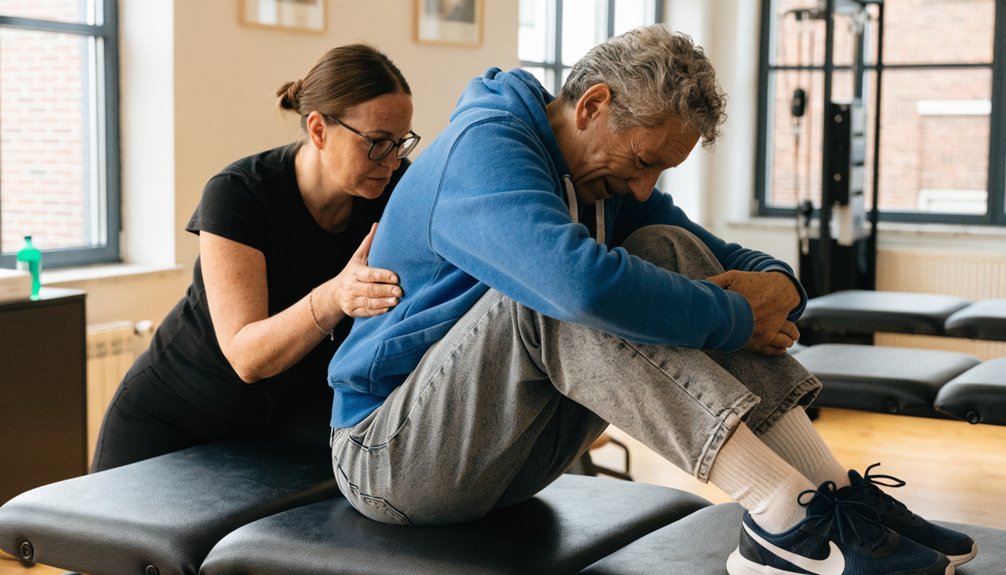
Although back pain and stiffness can start suddenly, they’re usually caused by a combination of mechanical strain, age-related changes, and inflammation affecting the muscles, ligaments, joints, discs, or nerves of the spine. You may develop symptoms after repetitive lifting, prolonged sitting, sudden twisting, or deconditioning that reduces spinal support. Muscle tension commonly accompanies overuse or stress, limiting normal movement and increasing discomfort. Postural issues can also overload specific spinal structures, especially when you spend long periods bending, slouching, or standing asymmetrically. With aging, discs lose hydration and elasticity, facet joints undergo degenerative change, and surrounding tissues become less resilient. In some cases, arthritis, disc bulging, or nerve irritation contributes to stiffness. Excess body weight, low activity levels, and poor ergonomics can further increase mechanical stress on your back overall. These issues may be part of broader age-related degeneration of discs and joints, which can gradually limit spinal flexibility and worsen stiffness over time.
Signs Your Back Pain Needs Medical Care
Most episodes of back pain improve with time and conservative care, but certain symptoms suggest a more serious cause and warrant medical evaluation. You shouldn’t ignore early symptoms that indicate nerve compression, infection, fracture, cancer, or worsening chronic conditions. Seek prompt assessment if your pain is severe, progressive, or unexplained. Early intervention and attention to persistent pain can help prevent long-term complications and support better outcomes.
- Pain follows a fall, crash, or lifting injury
- Weakness, numbness, or shooting pain travels down a leg
- Bowel or bladder changes occur with saddle numbness
- Fever, unexplained weight loss, or night pain develops
- Stiffness and pain persist beyond several weeks or recur often
You should also contact a clinician if pain prevents walking, standing, sleeping, or working normally, or if over-the-counter measures don’t help. Early evaluation can reduce complications and guide appropriate testing.
Back Pain Treatment That Eases Stiffness
If stiffness is limiting your movement, you’ll often benefit from gentle stretching methods that improve flexibility without increasing pain. You may also get short-term relief from heat, which can reduce muscle tension and make movement easier. Combined with regular, controlled activity, these measures can help restore mobility and support recovery. Working with a professional who can design tailored exercise routines for your back can further enhance flexibility, reduce stiffness, and support long-term pain relief.
Gentle Stretching Methods
When back muscles and surrounding tissues tighten, gentle stretching can reduce stiffness, improve short-term mobility, and make daily movement less uncomfortable without placing high stress on the spine. You should move slowly, stay within a tolerable range, and stop if symptoms radiate or intensify. Evidence supports low-load mobility work for easing mechanical back discomfort.
- Try knee-to-chest holds for lumbar flexion.
- Use pelvic tilts to restore controlled segmental motion.
- Add supported trunk rotation for mild rotational mobility.
- Select gentle yoga poses, like child’s pose.
- Consider light foam rolling for adjacent hip muscles.
Aim for brief sessions, consistent breathing, and symmetrical technique. If you’ve had trauma, progressive weakness, fever, or bowel or bladder changes, you shouldn’t self-manage with stretching alone and should seek prompt medical evaluation for safety.
Heat And Movement
Because stiffness often improves once tissues warm and circulation increases, applying heat before light movement can make back pain feel less restrictive and help you move with less guarding. Use heat therapy for 15 to 20 minutes with a warm pack or shower, keeping temperature moderate to avoid skin irritation.
After heating, begin controlled movement techniques such as pelvic tilts, slow trunk rotations, or short walks. These activities can reduce protective muscle tension, improve joint lubrication, and restore tolerance for daily tasks. You shouldn’t force range of motion or push into sharp pain, since overloading sensitized tissues may increase symptoms. If morning stiffness is prominent, pairing heat with gradual movement soon after waking may help. Stop and seek clinical evaluation if pain radiates, weakness develops, or bowel or bladder changes occur.
Stretches That Improve Back Mobility
Although stretching won’t correct every cause of back pain, targeted mobility exercises can reduce stiffness, improve spinal range of motion, and support more efficient movement in the surrounding muscles and joints. Choose controlled movements that improve dynamic flexibility without provoking symptoms, and keep breathing steady to avoid guarding. Physical therapists often integrate these stretches into broader programs that combine manual therapy and education on body mechanics for more effective, long-term back pain management.
- Use cat-camel to mobilize lumbar and thoracic segments.
- Try knees-to-chest for gentle flexion and reduced tightness.
- Perform open-book rotations to improve thoracic mobility.
- Add child’s pose to lengthen paraspinal tissues comfortably.
- Include pelvic tilts to reinforce neutral spinal alignment.
You’ll benefit most by moving slowly, staying within a tolerable range, and stopping if pain sharpens, radiates, or persists after exercise. Consistent, symptom-guided stretching can improve mobility and make daily movements feel less restricted overall.
Strength Exercises That Support Your Back
To support your spine after mobility work, you’ll benefit most from strength exercises that improve core stability and build controlled endurance in the muscles around your lower back. Evidence indicates that targeted, low-load movements can reduce mechanical stress on the spine while improving function. You should focus on safe, well-aligned exercises that strengthen without provoking pain. Consistent, targeted strengthening that supports spinal health can also reduce the risk of future episodes of low back pain and improve overall function.
Core Stability Moves
When back pain is present, core stability exercises can help by improving trunk control and reducing excessive strain on the spine during everyday movement. You should prioritize low-load patterns that train core engagement and pelvic alignment without provoking symptoms. Evidence supports controlled, endurance-focused activation over forceful bracing for restoring function.
- Begin with abdominal bracing while breathing normally.
- Practice dead bugs to coordinate trunk and limb control.
- Use bird-dog holds to improve spinal stability.
- Try side planks modified at the knees if needed.
- Stop if pain sharpens, radiates, or lingers afterward.
You’ll benefit most from slow repetitions, neutral posture, and consistent practice. Keep effort moderate, maintain steady breathing, and focus on quality rather than fatigue. If symptoms persist, consult a physical therapist for individualized progression and monitoring.
Safe Lower Back Strengthening
Core stability lays the foundation, but safe lower back strengthening adds the capacity your spine and surrounding muscles need to handle lifting, walking, and prolonged standing with less strain. Start with low-load hip hinges, bridges, bird-dogs, and modified back extensions, keeping movement slow and pain-free.
You should feel muscular effort, not sharp or radiating pain. Use controlled breathing, neutral alignment, and gradual loading to improve endurance without provoking irritated tissues. Evidence supports combining strengthening with posture correction and ergonomic adjustments, especially if sitting or repetitive bending contributes to symptoms. Perform two to three sessions weekly, allowing recovery between efforts. As tolerance improves, increase repetitions before resistance. If symptoms worsen, centralize poorly, or include numbness or weakness, stop and seek evaluation from a qualified clinician promptly to rule out.
Heat, Ice, and Massage for Back Pain
Although medications and exercise often get more attention, heat, ice, and massage can provide short-term relief for many types of back pain, particularly muscle strain and tension-related discomfort. Used correctly, these approaches may reduce pain signals, muscle guarding, and perceived stiffness. In many chronic cases, combining heat, ice, and massage with personalized care strategies such as physiotherapy, myotherapy, and tailored exercises can support longer-term improvements in mobility and function.
- Use heat therapy for tight, aching muscles or morning stiffness.
- Limit ice application to 15–20 minutes after acute strain or flare-ups.
- Place a barrier between skin and hot or cold packs.
- Choose massage techniques that use moderate pressure, not painful force.
- Stop treatment if symptoms worsen, spread, or cause numbness.
You’ll usually get the best pain relief by matching the method to your symptoms. Evidence supports these options for temporary symptom control, not structural correction or treatment of progressive neurologic deficits.
Daily Habits That Prevent Back Stiffness
Heat, ice, and massage can ease symptoms in the short term, but daily movement habits often do more to limit recurring back stiffness. You’ll usually benefit most from changing how often you sit, stand, bend, and walk throughout the day. Prolonged static posture reduces joint lubrication and increases muscle guarding. Aim to change positions every 30 to 60 minutes, even briefly. If you work at a desk, set up an ergonomic workspace that keeps your screen at eye level, supports your forearms, and lets your feet rest flat. Avoid poor posture by keeping your ribs stacked over your pelvis rather than slumping forward. Regular walking, gentle hip mobility work, and core endurance exercises can improve spinal tolerance to daily loads and reduce stiffness over time. Consistency matters more than intensity. Integrating ergonomic furniture and simple posture checks into your routine can further reduce back strain and support long-term spinal health.
How to Choose the Right Back Pain Treatment
How do you choose the right back pain treatment? Start with an accurate diagnosis, because treatment should match the cause, severity, and duration of your symptoms. You’ll benefit most from therapies supported by evidence and tailored to your function, mobility limits, and medical history. Drawing on your medical history, physical exam, and targeted tests like X-rays or MRI, your clinician can pinpoint the source of pain and recommend appropriate non-surgical treatments.
- Assess whether pain is acute, recurrent, or chronic.
- Look for red flags like weakness, fever, or trauma.
- Use exercise-based physical therapy to restore movement.
- Consider medications carefully, balancing benefit and side effects.
- Discuss alternative therapies and lifestyle modifications with your clinician.
You shouldn’t rely on one approach alone. Multimodal care often works best, combining movement, ergonomic changes, and symptom control. If pain persists beyond several weeks or worsens, seek reassessment to refine your treatment plan promptly.
Frequently Asked Questions
Can Poor Sleep Positions Contribute to Recurring Back Stiffness?
Yes—like a bent hinge, poor sleep posture can trigger recurring back stiffness. You’ll reduce strain by improving mattress quality, maintaining neutral spinal alignment, and avoiding prolonged twisted positions that overload muscles, joints, and supporting ligaments.
Are Ergonomic Chairs Worth It for Chronic Back Discomfort?
Yes, they’re often worth it if you have chronic back discomfort, because ergonomic benefits and chair design can improve posture, reduce spinal loading, and support symptom management, though you’ll get best results when combined with movement and exercise.
When Should I Consider Acupuncture for Back Pain Relief?
Like a yellow caution light, you should consider acupuncture when pain persists beyond weeks, limits function, or standard care falls short; discuss acupuncture techniques and treatment frequency with your clinician, considering evidence, risks, preferences.
Can Hydration Levels Affect Spinal Disc Health and Flexibility?
Yes—your hydration levels can influence spinal disc function and flexibility. Adequate fluid supports disc height and shock absorption, while poor hydration may worsen hydration effects and contribute indirectly to disc degeneration, especially with aging.
Do Supportive Shoes Make a Difference in Back Pain Management?
Like Atlas bearing less weight, you’ll often notice supportive shoes help manage back pain by improving foot alignment and providing arch support. They can reduce abnormal loading patterns, though benefits vary with gait, anatomy, and activity.