
If you’re starting a back pain treatment program, you can expect more than symptom relief. Your care should begin with a focused evaluation to identify likely pain drivers, movement limits, and activity goals. From there, treatment is usually built around exercise, mobility work, education, and, when needed, medical support. The aim is to help you move better, hurt less, and return to daily tasks safely—but how that process unfolds matters.
Key Takeaways
- Your program typically aims to reduce pain, restore movement, and help you safely return to daily activities.
- Expect an initial evaluation covering symptoms, medical history, mobility, strength, flexibility, reflexes, and pain triggers.
- Treatment is usually personalized and may include physical therapy, mobility exercises, core strengthening, posture correction, and manual therapy.
- Medications or injections may be used short term to control pain and improve participation in rehabilitation.
- Progress is tracked through function, strength, and range of motion, with home exercises and ergonomic changes supporting recovery.
What Does a Back Pain Treatment Program Do?
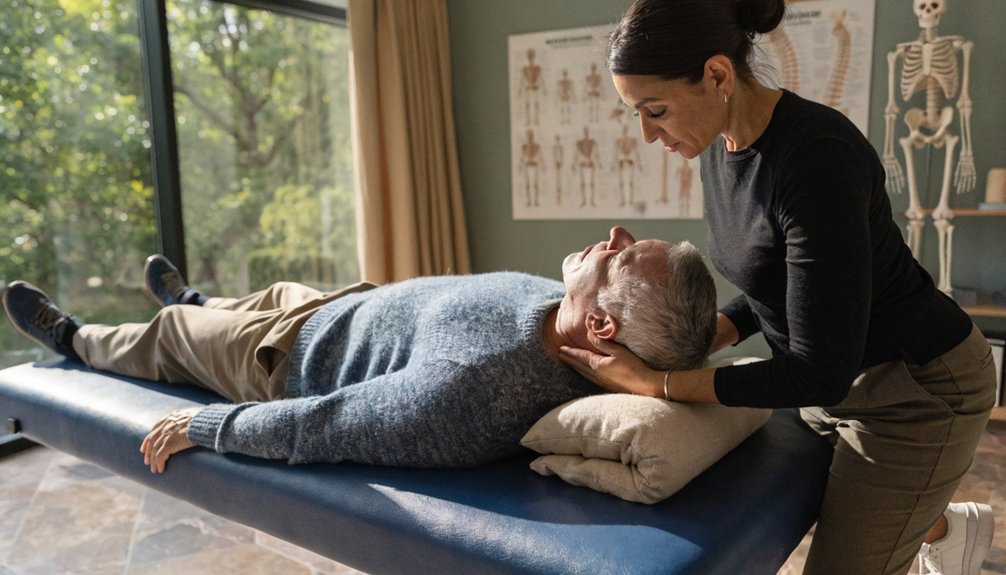
A back pain treatment program is designed to do three core things: reduce pain, restore movement, and help you return to daily activities safely. It uses evidence-based strategies to improve how your spine, muscles, and nervous system function together. You’ll typically focus on graded exercise, mobility work, strength training, and pain-management techniques that match your abilities and goals. In many cases, programs draw on personalized care approaches such as physiotherapy, myotherapy, and posture correction to address the root causes of chronic back pain and support long-term relief.
If you have chronic pain, the program also helps you build tolerance for movement without worsening symptoms. You’ll practice functional tasks, improve posture and body mechanics, and learn pacing so you can do more with less flare-up risk. Education is a key part of treatment, because understanding pain can reduce fear and improve confidence. You may also make lifestyle modifications, such as improving sleep, increasing activity, or changing work habits, to support recovery.
How Your Back Pain Evaluation Usually Starts
Before treatment begins, your evaluation usually starts with a detailed conversation about your symptoms, medical history, daily activity limits, and any movements or positions that make your pain better or worse. You’ll describe your initial symptoms, when they started, how they’ve changed, and what tasks are hardest now. Your provider may also ask questions to determine whether your pain is acute or chronic, or possibly related to specific conditions like arthritis or a herniated disc.
Next, your provider typically uses structured evaluation techniques to assess how your back functions during basic movements. You may be asked to bend, walk, sit, stand, or change positions while they observe mobility, control, and pain response. They’ll often check strength, flexibility, reflexes, and sensation to understand how your body is performing. This process helps identify measurable limits, establish a baseline, and guide a treatment plan focused on improving function, reducing pain, and supporting safer daily movement over time.
What Causes Your Back Pain?
Once your evaluation shows how your back responds to movement, the next step is identifying what’s driving those symptoms. Your pain may come from muscle strain after lifting, poor posture during work, or nerve compression that refers discomfort into your leg. Some cases involve herniated discs, spinal injuries, or age related changes that affect joint mobility and tissue tolerance. In many people, a sedentary lifestyle weakens supporting muscles and increases the strain on spinal structures, making back pain more likely to develop or persist.
You’ll also look beyond structure alone. Lifestyle factors like sleep, stress, smoking, and low activity levels can increase sensitivity and slow recovery. That’s why stress management, ergonomic adjustments, and consistent movement matter when understanding why symptoms persist. Evidence shows back pain is often multifactorial, meaning several contributors may overlap. Pinpointing those contributors helps explain your pain pattern, aggravating positions, and what your back currently tolerates each day.
How a Back Pain Treatment Plan Is Built
Your treatment plan starts with an initial pain assessment to identify how your symptoms behave, what movements aggravate them, and how back pain is limiting your daily function. From there, your clinician builds a personalized care strategy based on your exam findings, goals, and current activity tolerance. That approach helps target pain relief, restore movement, and improve the tasks you need to do each day. In many cases, this assessment may also include targeted imaging tests or other diagnostics to clarify the cause of your back pain and guide the most appropriate treatment options.
Initial Pain Assessment
Although back pain can feel straightforward, an effective treatment plan starts with a focused pain assessment that looks beyond where it hurts. You’ll be asked about your initial symptoms, pain history, daily activity limits, sleep disruption, and any numbness, weakness, or referred pain. This helps your clinician screen for urgent issues and identify patterns linked to movement, posture, workload, or previous injury.
You can also expect a physical exam that checks spinal motion, strength, flexibility, reflexes, and tolerance for sitting, standing, walking, or bending. Functional testing shows how your back responds during real tasks, not just at rest. If needed, your provider may review prior imaging, though scans aren’t always useful early on. The goal is to define the problem accurately so rehabilitation targets the right impairments and limitations.
Personalized Care Strategy
Because back pain varies widely in cause, irritability, and functional impact, your treatment plan is built around the specific findings from your assessment rather than a one-size-fits-all protocol. Your provider matches interventions to your symptoms, movement limits, daily demands, and recovery goals, then adjusts them as you respond to care.
You may start with pain-calming strategies, but the plan usually progresses toward restoring mobility, strength, endurance, and confidence with everyday tasks. If you have chronic conditions, your program may move more gradually and include pacing, flare-up management, and education to improve self-management. A holistic approach also considers sleep, stress, work setup, and activity habits that influence pain and healing. Throughout treatment, your progress is measured functionally, so you can return safely to the activities that matter most.
Which Back Pain Treatments Are Most Common?
You’ll most often start with conservative care, especially physical therapy options that improve mobility, build strength, and restore function. If pain limits your progress, your clinician may also consider medication or targeted injections to help you move more comfortably. The best results usually come when these treatments support your rehabilitation goals rather than replace them. Physical therapy often combines manual therapy with targeted exercises and education on body mechanics to reduce pain, improve mobility, and prevent future back injuries.
Physical Therapy Options
When back pain limits movement, physical therapy is one of the most common and effective treatment options because it targets the underlying mechanical issues rather than just masking symptoms. Your plan may include:
- manual therapy to reduce stiffness, support mobility improvement, and ease pain management
- therapeutic exercises for strength, endurance, and posture correction during daily activities
- functional training, patient education, and relaxation techniques to improve body mechanics and confidence
A therapist assesses how you bend, lift, sit, and walk, then builds a program around your goals. Evidence supports active rehabilitation because it helps restore movement, reduce recurrence, and improve function over time. You’ll usually progress from gentle mobility work to more demanding tasks, so you can return to work, exercise, and routine activities with better control and less pain overall.
Medication And Injections
Several medication and injection options are commonly used to reduce back pain enough for you to stay active and participate in rehabilitation. Your clinician may recommend short-term NSAIDs, acetaminophen, or muscle relaxants, depending on your symptoms, medical history, and functional goals. These pain relief methods aren’t usually meant to fix the cause, but they can improve your tolerance for exercise, walking, and daily tasks.
If pain persists or flares, your care team may discuss injection types such as epidural steroid injections, facet joint injections, or nerve blocks. These are typically considered when inflammation or nerve irritation limits progress in therapy. Evidence suggests injections may provide temporary relief for selected patients, especially when paired with exercise and education. You’ll usually be monitored closely so treatment supports movement, not rest alone.
What Physical Therapy for Back Pain Looks Like
Although every plan is tailored to your symptoms, goals, and movement patterns, physical therapy for back pain usually starts with a thorough evaluation of how you move, where pain is triggered, and which muscles or joints may be contributing to the problem. Your therapist then builds a program focused on reducing strain and restoring function through targeted, progressive exercise. In many clinics, this is part of a broader, evidence-based approach shaped by professional standards from organizations such as World Physiotherapy.
- Guided stretching and mobility work to improve joint motion and decrease stiffness
- Core strengthening exercises that support your spine during daily activities
- Posture improvement strategies that help you sit, stand, lift, and walk with less stress
You may also receive manual therapy, movement retraining, and education on pacing. The goal isn’t just symptom relief; it’s helping you move more efficiently, tolerate activity better, and prevent aggravation during work and home tasks.
How Long Does Back Pain Treatment Take?
How long back pain treatment takes depends on what’s driving your symptoms, how long they’ve been present, and how consistently you can follow the plan. Some people improve within weeks, while chronic conditions may require months of progressive rehab. Your healing timeline usually reflects tissue irritability, movement tolerance, strength deficits, and daily demands. You’ll likely move faster if you stay active, practice home exercises, and modify aggravating tasks. Evidence-based care aims to reduce pain, restore function, and build resilience, not just chase short-term relief. Most plans evolve as your capacity improves, helping you return to work, exercise, and daily movement safely. In many cases, consistent targeted exercise and physical therapy can progressively reduce pain episodes and improve long-term spine health.
| Factor | Typical effect |
|---|---|
| Recent strain | Often shorter course |
| Nerve irritation | May take longer |
| Strength loss | Needs gradual rebuilding |
| Chronic conditions | Usually longer timeline |
How Progress Is Tracked During Treatment
As your treatment timeline unfolds, progress is tracked by more than pain alone. Your provider looks at objective and functional progress indicators to see how your back responds to care over time. That means you won’t be judged only by symptom intensity on a given day.
- changes in range of motion, strength, and movement quality
- tolerance for sitting, standing, walking, lifting, or work tasks
- standardized pain, disability, and activity scores over repeated visits
These measures help identify treatment milestones and guide adjustments to your plan. If your mobility improves, flare-ups shorten, or daily tasks require less compensation, that’s meaningful progress. You may also be reassessed through physical exams and outcome questionnaires, which provide evidence-based benchmarks. Tracking these patterns helps your team keep treatment targeted, rehabilitative, and function focused for lasting gains. In some programs, your progress data may also contribute to larger research efforts, such as ongoing clinical trials, that study which back pain treatments work best over time.
What You Can Do at Home for Back Pain

A few consistent home strategies can support your recovery between visits and help reduce strain on your back during daily activity. Follow your provider’s plan with stretching exercises and mobility drills that match your condition, since doing too much too soon can aggravate symptoms. Use heat therapy for short periods to ease muscle tension before movement. Make ergonomic adjustments to your workstation, car seat, and sleep setup so your spine stays better supported. You can also practice posture correction during lifting, sitting, and changes from bed or chairs. Add prescribed strengthening routines to build trunk and hip support for functional tasks. Mindfulness techniques and other relaxation methods may help reduce guarding, improve breathing, and make movement feel less threatening. Consistent routines at home help your spine adapt better over time and can make daily movements more comfortable. Consistency matters more than intensity when you’re managing back pain at home.
Signs Your Back Pain Treatment Program Is Working
With steady follow-through at home and in treatment, you’ll usually notice progress in the way your back feels and functions before symptoms disappear completely. Early healing milestones often show up as improved tolerance for sitting, walking, lifting, or sleeping, along with less morning stiffness and fewer pain flare-ups during normal activity. As your program progresses, you may also notice that targeted exercise and stretching routines make it easier to stay active with less day-to-day back discomfort.
- You can move with better range, control, and confidence during daily tasks.
- Your recovery time after activity shortens, even if mild soreness still appears.
- You need fewer compensations, like guarding, bracing, or avoiding certain movements.
These changes suggest your program is building strength, mobility, and load tolerance in a measurable way. If progress stalls, your provider may make treatment adjustments based on symptoms, function, and response to exercise, helping you keep moving safely toward longer-term pain reduction.
Frequently Asked Questions
Will Insurance Cover My Back Pain Treatment Program?
Yes—your plan may cover it, but you’ll need to check insurance policies and coverage limits. Think of it like a seatbelt: helpful, not unlimited. You can verify benefits, referrals, copays, and medical-necessity requirements first.
Do I Need a Referral to Start Back Pain Treatment?
You may not need a referral to start back pain treatment, though requirements vary by insurance and state laws. You can often access physical therapy directly, while some chiropractic options or specialists may still require one.
Can I Keep Working During Back Pain Treatment?
Like adjusting a sail mid-journey, you can often keep working during treatment if duties are modified. Your clinician will guide pain management, pacing, and work life balance to support function, recovery, and evidence-based rehabilitation safely.
What Should I Wear to Back Pain Treatment Sessions?
You should wear comfortable clothing that lets you move easily and allows therapist access to your back, hips, and legs. Choose supportive footwear for gait and exercise work. Avoid restrictive fabrics, unstable shoes, and bulky layers.
When Should I Seek Emergency Care for Back Pain?
Seek emergency care immediately—it’s as urgent as a five-alarm fire—if your back pain follows trauma, causes weakness, numbness, fever, or bladder/bowel changes. You shouldn’t wait on acute symptoms, even with chronic conditions.