
Like Atlas carrying too much for too long, your spine can start to fail under repeated workplace strain. Work-related back pain often develops from lifting, prolonged sitting, poor posture, or repetitive motion, and effective care usually starts with activity changes, anti-inflammatory measures, and targeted physical therapy. Early treatment can reduce pain and limit lost function, but the cause of your symptoms and the right next step aren’t always obvious.
Key Takeaways
- Work-related back pain often stems from lifting, twisting, prolonged sitting, awkward postures, and poor workstation ergonomics.
- Initial treatment includes staying active, modifying painful tasks, and using nonprescription anti-inflammatory medications rather than prolonged bed rest.
- Physical therapy helps reduce pain through targeted exercises, posture training, ergonomic assessment, and safer movement strategies.
- Recovery should restore job-specific function with graded strengthening, flexibility work, and improved lifting or sitting mechanics.
- Seek medical care if pain follows a workplace injury, lasts several days, or causes numbness, weakness, or bowel/bladder changes.
What Causes Work-Related Back Pain?

Although work-related back pain can start with a single strain, it more often develops from repeated physical and ergonomic stressors that overload the muscles, ligaments, discs, and joints of your spine. You’re at higher risk when your job involves heavy lifting, twisting, prolonged sitting, awkward postures, vibration, or repetitive motions that limit tissue recovery. Poor workstation design can increase spinal loading, especially when screens, chairs, tools, or work surfaces don’t support neutral alignment. Fatigue, reduced core endurance, and infrequent movement breaks can further impair your body’s ability to tolerate daily demands. Preventive strategies focus on exposure reduction: ergonomic adjustments, safe lifting mechanics, task variation, strength and flexibility training, and scheduled microbreaks. When these measures are consistent, you can lower cumulative strain and reduce the likelihood of persistent back symptoms over time. Addressing workplace factors early can prevent occasional low back pain from progressing into more serious, chronic work-related problems.
How Is Work-Related Back Pain Diagnosed?
To diagnose work-related back pain, your clinician will first review your medical history, symptoms, job tasks, and any prior injuries to identify likely causes and risk factors. You’ll also have a physical exam, and if red flags or persistent symptoms are present, imaging or other tests may be used to rule out serious conditions and confirm the diagnosis. In some cases, additional tests such as electrophysiological tests may be used to measure muscle and nerve activity and help identify underlying dysfunction. This stepwise approach helps you get appropriate treatment while avoiding unnecessary testing.
Medical History Review
A focused medical history is often the first step in diagnosing work-related back pain, because it helps your clinician connect symptoms to job tasks, timing, and potential risk factors. You’ll be asked when pain started, what movements worsen it, whether symptoms spread, and how work duties such as lifting, bending, twisting, vibration, or prolonged sitting affect it.
Your clinician will also review prior injuries, chronic conditions, medications, surgeries, and family history that may influence pain or recovery. Lifestyle factors, including smoking, sleep quality, fitness, stress, and body weight, can increase strain or delay healing. You should describe any numbness, weakness, bowel or bladder changes, fever, or unexplained weight loss, since these may indicate more serious causes. Clear, accurate answers support safer treatment, workplace modifications, and prevention of recurrent injury.
Imaging And Tests
Because most work-related back pain improves without extensive testing, imaging and other diagnostic studies aren’t usually ordered at the first visit unless your history or exam suggests a serious condition. If red flags appear, your clinician may recommend targeted tests to identify fractures, nerve compression, infection, or other structural causes and guide safer return-to-work planning.
- X ray analysis helps detect fractures, alignment problems, or severe degeneration after trauma.
- MRI scans are used when you have neurologic deficits, persistent sciatica, or suspected disc injury.
- CT scans may be considered if MRI isn’t possible or bony detail is needed.
- Lab tests or nerve studies can help rule out infection, inflammation, or ongoing nerve damage.
These studies are chosen selectively, so you avoid unnecessary radiation, cost, and incidental findings.
Back Pain Treatment Options That Work

Several back pain treatments can help, but the most effective options depend on the cause, symptom pattern, and how long the pain has lasted. For recent work-related strain, you may benefit from short-term activity modification, heat, and nonprescription anti-inflammatory medication if it’s medically appropriate. Prolonged bed rest isn’t advised because it can delay recovery. Current practice guidelines, such as the Adult Acute and Subacute Low Back Pain 16th Edition, emphasize evidence-based management strategies and the importance of regular updates to keep care recommendations current.
If symptoms persist, your clinician may recommend targeted prescription medications, temporary work restrictions, or supervised return-to-work planning. When nerve irritation is suspected, selected patients may benefit from image-guided injections, though results vary. If you have chronic pain, treatment usually shifts toward improving function, sleep, and coping while reducing reinjury risk. Preventive care matters: ergonomic solutions, safe lifting habits, healthy body weight, and early reporting of symptoms can lower recurrence and support long-term work capacity.
Physical Therapy for Work-Related Back Pain
If your back pain is related to work, physical therapy can help reduce strain, improve function, and support a safer recovery. You’ll use targeted exercises and movement training to restore mobility, relieve pain, and lower the risk of reinjury. With an evidence-based plan, you can return to daily tasks and job demands with better control and less discomfort. Incorporating tailored exercise routines and stretching into your physical therapy program can further enhance flexibility, address muscle tightness, and support long-term back health.
Physical Therapy Benefits
When back pain is tied to your job, physical therapy can help reduce pain, restore movement, and lower the risk of ongoing disability. Your treatment plan is typically tailored to job demands, symptom patterns, and functional limits, using measurable goals to guide progress and prevent recurrence.
- Pain control: You may benefit from manual therapy, mobility work, and targeted exercises that decrease stiffness and improve spinal mechanics.
- Function: Physical therapy helps you rebuild strength, flexibility, and endurance needed for lifting, standing, bending, or prolonged sitting.
- Prevention: Ergonomic assessments can identify workplace stressors and support safer body mechanics during daily tasks.
- Self-management: You’ll learn strategies for posture, pacing, and home exercise, which can reduce flare-ups and support long-term back health over time.
Workplace Injury Recovery
Returning to work after a back injury often requires more than pain relief alone, and physical therapy is commonly used to restore job-specific function while reducing the risk of re-injury. Your therapist may assess lifting mechanics, sitting tolerance, stamina, and movement patterns related to your duties. Based on those findings, you’ll follow a graded program that rebuilds capacity safely and measures progress objectively.
You may also receive guidance on ergonomic adjustments, such as workstation setup, tool positioning, and task pacing, to limit excessive spinal load. Education is equally important: you’ll learn how to recognize early warning signs, follow safe return-to-work recommendations, and support workplace wellness efforts. This preventive approach helps you meet job demands more reliably while lowering the likelihood of recurrent occupational back problems over time.
Mobility And Pain Relief
Because work-related back pain often limits how well your spine and surrounding muscles move, physical therapy typically begins with targeted strategies to improve mobility while reducing pain enough for safe activity. Your therapist will use graded mobility exercises, symptom monitoring, and pain management methods to restore motion without aggravating injured tissues and support healing.
- You’ll start with gentle spinal movements to reduce stiffness and improve circulation.
- You may use heat, ice, or manual therapy to decrease pain before exercise.
- You’ll practice core activation and posture correction to protect healing structures.
- You’ll progress to work-specific movements that build tolerance for lifting, bending, or standing.
This approach is preventive and evidence-based, helping you regain function, reduce recurrence risk, and return to job tasks more safely with confidence.
Exercises That Support Back Pain Treatment
Start with controlled, low-impact exercises that improve core stability, flexibility, and spinal support, since consistent movement can reduce pain, improve function, and help prevent future flare-ups. Emphasize core strengthening and flexibility training to support healing and tissue tolerance. Begin gradually, monitor symptoms, and stop if pain sharply increases. Exercises should match your diagnosis and workload demands. Regular movement and targeted strengthening can increase spinal health and reduce the risk of future back pain episodes.
| Exercise | Purpose |
|---|---|
| Walking | Improves circulation |
| Bird-dog | Builds trunk control |
| Bridge | Activates glutes |
| Knee-to-chest | Promotes mobility |
You’ll benefit most by exercising on a regular schedule rather than pushing through occasional intense sessions. Clinical guidance supports steady progression, proper technique, and symptom-based adjustments. If symptoms radiate, weaken your leg, or persist, seek medical evaluation before advancing intensity further.
How Posture Changes Reduce Back Pain
Although posture alone doesn’t cause every episode of back pain, changing how you sit, stand, and lift can reduce mechanical stress on the spine and surrounding muscles, which often helps lower pain during daily activity. Integrating ergonomic furniture and physiotherapy-based posture strategies into your workspace can further support spinal alignment and long-term back health.
- Keep your ears, shoulders, and hips aligned to support neutral spinal curves.
- Use posture correction strategies, including lumbar support and regular position changes.
- Make ergonomic adjustments to chair height, monitor level, and keyboard placement.
- Hinge at your hips and keep loads close when you lift.
These changes don’t cure every condition, but they can improve force distribution, reduce muscle guarding, and limit repeated irritation. You’ll often benefit most by pairing better mechanics with movement breaks, since sustained static positions increase tissue strain and sensitivity over time. Consistency matters more than perfection for prevention.
When to See a Doctor for Back Pain
When should you see a doctor for back pain? You should seek medical evaluation if pain follows a workplace injury, persists beyond a few days, or limits walking, lifting, sleep, or job duties. Early intervention can identify muscle strain, disc injury, or nerve involvement before symptoms worsen. Seeing a doctor promptly can also help prevent long-term complications associated with untreated or recurring back pain.
See a doctor urgently if you develop numbness, weakness, pain shooting below the knee, fever, unexplained weight loss, or bowel or bladder changes. These signs may indicate serious conditions requiring prompt assessment. If your symptoms keep returning, don’t ignore them; recurrent episodes can contribute to chronic pain and longer recovery. A clinician can examine you, review work demands, and determine whether imaging, medication, physical therapy, or modified activity is medically appropriate. Timely care supports safer recovery and better function.
Preventing Future Work-Related Back Problems
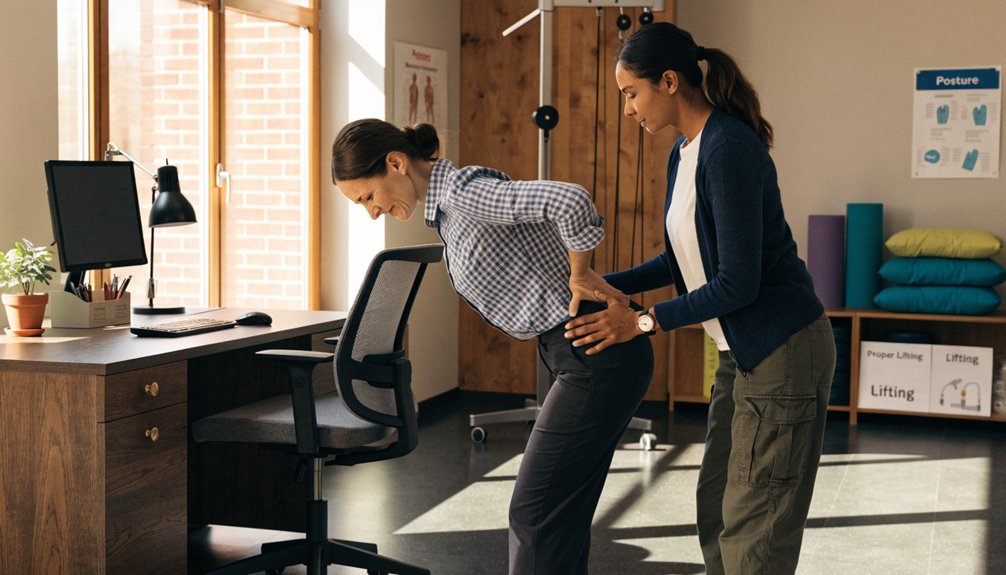
After evaluation and recovery, the next goal is reducing the risk of another work-related back injury. Prevention works best when you address biomechanics, conditioning, and daily habits together. Evidence shows that consistent workplace adjustments and targeted exercise can lower recurrence and improve function over time. Integrating personalized ergonomic solutions into your daily routine can further minimize spinal strain and support long-term back health.
- Use ergonomic tools to keep your spine neutral, reduce repetitive strain, and improve lifting mechanics.
- Follow a strengthening plan focused on core endurance, hip stability, and flexibility to support spinal loads.
- Take scheduled movement breaks, vary tasks, and avoid prolonged sitting or sustained awkward postures whenever possible.
- Make lifestyle modifications such as weight management, sleep optimization, smoking cessation, and regular physical activity, since these influence pain sensitivity and tissue recovery.
Review your workstation and symptoms periodically.
Frequently Asked Questions
Can Workers’ Compensation Cover Treatment for Job-Related Back Pain?
Yes, you can receive workers’ compensation for job-related back pain if you meet compensation eligibility requirements. You’ll typically access treatment options like evaluation, physical therapy, medications, and modified duties to support recovery and prevent reinjury.
How Long Does Recovery From Work-Related Back Pain Usually Take?
You can recover from work-related back pain in days to months; your recovery timeline depends on strain severity, nerve involvement, job demands, and adherence. Early evaluation, activity modification, exercise, and pain management usually improve outcomes.
Can Stress at Work Make Back Pain Feel Worse?
Yes, work stress can make your back pain feel worse by increasing muscle tension and pain sensitivity. You’ll benefit from stress management and ergonomic adjustments, which can reduce strain, improve coping, and help prevent symptom flare-ups.
Are Standing Desks Helpful for Employees With Chronic Back Pain?
Yes—because your spine clearly loves monotony—standing desks can help if you alternate positions. You’ll gain ergonomic benefits and improve standing posture, but evidence supports gradual use, proper setup, and movement breaks to prevent symptom aggravation.
What Job Modifications Can Help During Back Pain Recovery?
You can recover better with ergonomic adjustments, flexible hours, reduced lifting, task rotation, and scheduled movement breaks. These modifications decrease spinal strain, support function, and help you gradually resume duties while preventing symptom flare-ups and re-injury.