
You don’t need to push hard, you don’t need to move perfectly, and you don’t need to fear every flare-up. With chronic back pain, progressive exercise can help you rebuild tolerance, improve muscle coordination, and restore more comfortable movement over time. When you start with manageable loads and increase them gradually, your back often becomes less sensitive and less stiff. The key is knowing how to begin without making symptoms worse.
Key Takeaways
- Progressive exercise builds the back’s tolerance to movement and load, helping reduce pain sensitivity over time.
- Starting with gentle walking, stretching, or mobility drills can improve comfort without overwhelming sensitive tissues.
- Gradual strength exercises like bridges and sit-to-stands support the trunk, hips, and legs, easing strain on the back.
- Controlled, repeated movement improves coordination, reduces guarding, and helps restore confidence in everyday activities.
- Consistent, low-intensity exercise with small progressions creates lasting habits and lowers the risk of flare-ups.
Why Progressive Exercise Helps Back Pain

Although back pain can make movement feel risky, progressive exercise helps by exposing your spine and surrounding muscles to manageable loads that build tolerance over time. As you move consistently, tissues adapt, coordination improves, and your nervous system becomes less reactive. That means everyday tasks can feel less threatening and more doable. You’re not just strengthening your back. You’re improving muscle engagement across your trunk, hips, and legs, which helps distribute force more efficiently. Progressive exercise also supports pain modulation by giving your brain and body repeated, safe movement experiences. Research suggests this can reduce sensitivity, improve confidence, and restore function. When exercises are advanced gradually, you build capacity without overwhelming yourself, making activity a practical way to calm pain and reclaim movement over weeks and months. In clinics like Melbourne Back Pain Treatment, progressive exercise is often combined with tailored exercise programs and posture-focused therapies to support long-term relief and better function.
Start Chronic Back Pain Exercise Safely
That gradual approach works best when you start from a level your body can handle today, not where you think you should be. Begin with short, low-intensity sessions, such as walking, gentle stretching, or simple mobility drills, and notice how your back responds during and after movement. Research suggests that tolerable movement can calm sensitivity and improve confidence over time. Incorporating tailored exercise routines that address muscle tightness and back strength can further support long-term pain relief and sustainable back health.
Use pain awareness as your guide, not fear. Mild discomfort doesn’t always mean harm, but sharp, escalating, or lingering pain is a sign to reduce range, duration, or speed. Keep your breathing steady, move with control, and leave a little energy in reserve. Consistency matters more than pushing hard. If you’re unsure where to start, a physical therapist can help you choose movements that feel safe and doable for now.
Build Strength Without Flaring Back Pain
When strength work is introduced gradually, it can support your back rather than provoke it. You don’t need heavy loads to make progress. Research suggests that low-load, well-tolerated strengthening can reduce pain sensitivity and improve function over time. Start with simple patterns like sit-to-stands, supported hip hinges, bridges, or bird dogs, and focus on steady breathing and control. Incorporating personalized exercise programs that target core strength, flexibility, and spinal health can further support long-term back pain prevention and management.
Aim for effort that feels challenging but manageable, not exhausting. A mild increase in symptoms during or after exercise can be acceptable if it settles within a day. This approach supports pain management while helping you build confidence. Prioritize consistency over intensity, and progress by adding repetitions, resistance, or time gradually. As your core stability improves, everyday tasks often feel easier, safer, and less threatening to your back over time.
Improve Mobility for Chronic Back Pain
Because stiffness can make daily movement feel guarded, gentle mobility work can help your back and hips move with less effort and less fear. When you practice controlled motions like pelvic tilts, knee rolls, cat-cow, and hip circles, you help joints stay nourished and tissues tolerate movement more comfortably. Research suggests graded motion can reduce pain-related guarding and improve function over time. As part of a long-term plan, combining daily mobility work with posture training exercises and other strengthening routines can support spinal stability and help prevent future episodes of back pain.
You don’t need extreme flexibility to benefit. Focus on smooth, tolerable ranges, steady breathing, and consistent repetition. Simple stretching techniques for the hip flexors, hamstrings, and glutes can ease tension that adds stress to your lower back. Adding brief mobility sessions to your daily routines, especially after long sitting, can improve comfort during walking, bending, and getting up from chairs while helping you move with more confidence.
Make Progressive Exercise a Lasting Habit
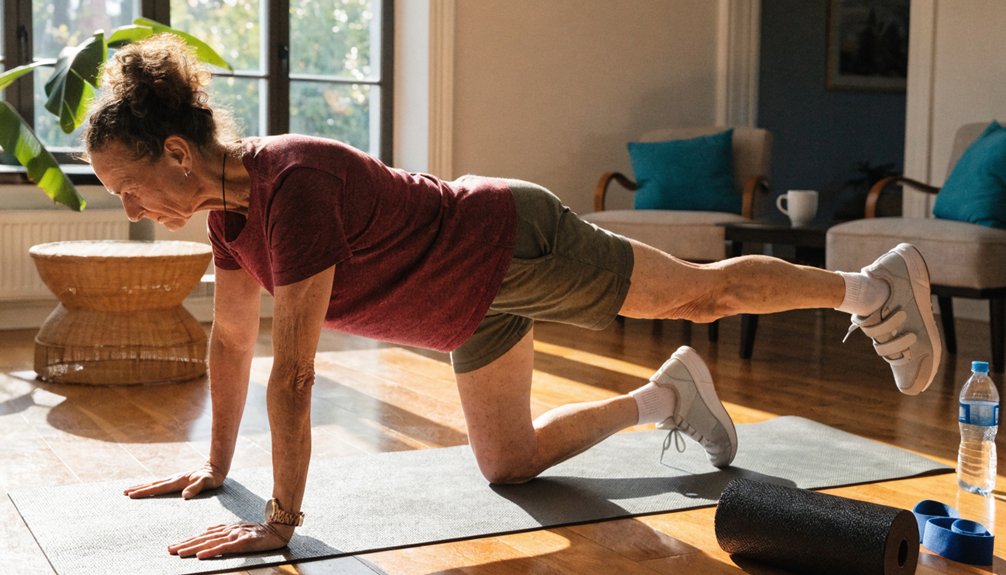
Although motivation will rise and fall, a simple plan makes progressive exercise far easier to keep doing. You’re more likely to stay consistent when sessions are short, specific, and matched to your current tolerance. Start with goal setting that focuses on behavior, like walking ten minutes or completing two strength exercises three times weekly. Small, repeatable targets build confidence and reduce flare-up risk. Because regular breaks from long periods of sitting or driving can reduce strain on your back, pairing them with short exercise sessions can further support pain control and recovery.
Routine tracking helps you notice patterns between exercise, symptoms, sleep, and stress. Use a notebook or app to record what you did, how hard it felt, and how your back responded the next day. That feedback supports gradual progression instead of guesswork. If pain spikes, scale volume or intensity rather than stopping completely. Consistency, not perfection, is what helps your back adapt over time and stay more resilient.
Frequently Asked Questions
When Should I See a Doctor for Chronic Back Pain?
See a doctor immediately if your back pain feels like a five-alarm fire, lasts beyond weeks, worsens with exercise, or includes weakness, numbness, or fever. You’ll need pain assessment and treatment options to recover safely.
Can My Mattress Worsen Chronic Back Pain Symptoms?
Yes, your mattress can worsen chronic back pain symptoms if mattress firmness doesn’t support neutral spinal alignment, reducing sleep quality. You’ll likely benefit from medium-firm support and progressive exercise, especially if morning pain or stiffness persists.
Does Body Weight Affect Chronic Back Pain Recovery?
Yes—losing just 5–10% of body weight can reduce pain and improve function. Your recovery may improve because body weight affects spinal load, and exercise impact helps strengthen support muscles without worsening symptoms.
Are Pain Medications Safe During an Exercise Program?
Yes, pain medications can be safe during your exercise program if you use them as prescribed and monitor side effects. For pain management and exercise safety, you should check with your clinician before changing activity intensity.
Can Stress or Anxiety Make Chronic Back Pain Worse?
Yes—up to 80% of people with chronic pain report stress-related flare-ups. Your stress impact and anxiety influence can heighten muscle tension and pain sensitivity, but gentle exercise, breathing, and consistency can help calm your system.