
Picture yourself standing up from a chair, bracing for that familiar pull in your back. Recovery usually goes better when you stay alert to warning signs, keep moving in safe, gradual ways, and use tools like heat, ice, posture changes, and rest with purpose. You’ll also need to avoid habits that quietly slow healing. A few small adjustments can reduce pain and help you regain function more steadily than you might expect.
Key Takeaways
- Stay gently active with short walks, light daily tasks, and frequent position changes instead of prolonged bed rest.
- Use ice for the first 24–48 hours after a flare-up, then heat to relax muscles before activity.
- Maintain good posture when sitting, standing, and lifting to reduce strain and support healing.
- Optimize sleep with supportive positions, a comfortable mattress, and a consistent bedtime routine to aid recovery.
- Seek medical care promptly for trauma, fever, weight loss, bowel or bladder changes, or worsening nerve symptoms.
Know When Back Pain Needs a Doctor
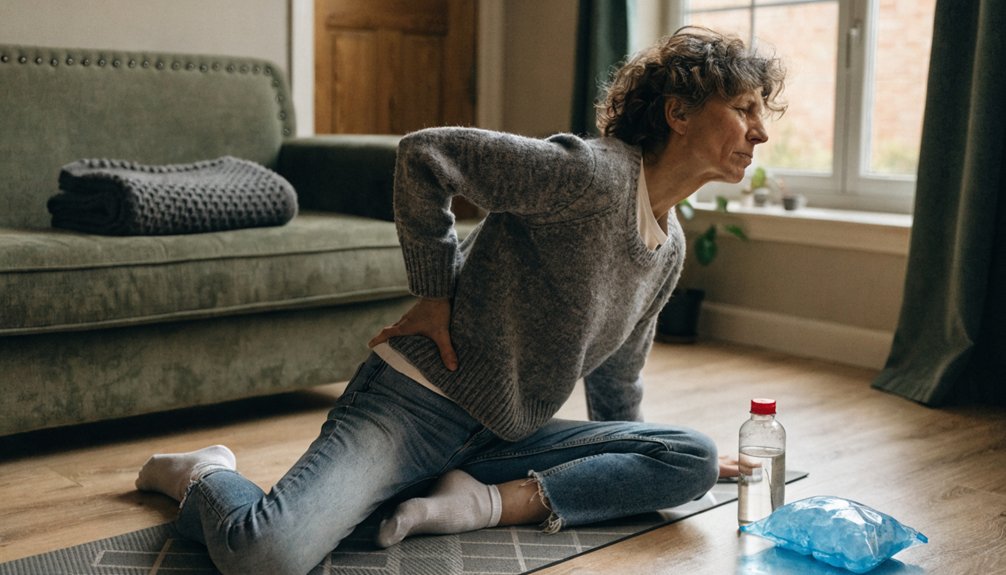
Although most episodes of back pain improve with time, movement, and gradual exercise, some symptoms mean you shouldn’t try to manage it on your own. You should seek help if pain follows major trauma, wakes you nightly, or comes with fever, unexplained weight loss, numbness, weakness, or bowel or bladder changes. These warning signs can point to nerve compression, fracture, infection, or other serious issues that need prompt medical evaluations. If you have chronic conditions like osteoporosis, cancer, or inflammatory disease, a lower threshold for assessment is sensible. A clinician can identify what’s driving your symptoms and explain treatment options, from imaging and medication to referral-based rehabilitation. Getting timely care protects function, supports safe recovery, and helps you return to exercise with an appropriate plan and better confidence. Persistent back pain that lasts longer than a week or two, especially when paired with reduced mobility, should also prompt a medical review to prevent longer-term complications.
Move Safely to Ease Back Pain
Start with gentle, controlled movement rather than bed rest, because staying completely still usually makes back pain feel worse and can slow recovery. Short walks, frequent position changes, and light daily activity help maintain circulation, reduce stiffness, and keep muscles engaged without overloading irritated tissues. Move within a tolerable range, and let pain guide your pace. Regular, low‑impact movement supports spine health and can lower the risk of future back pain episodes.
Add gentle stretching for your hips, hamstrings, and lower back, but don’t force end ranges or bounce. Focus on smooth breathing and steady form. When lifting, hinge at your hips, keep objects close, and avoid twisting under load. Use supportive footwear to improve alignment and reduce unnecessary strain during walking or standing. If an activity sharply increases symptoms, scale it back, then gradually rebuild tolerance with consistent, manageable movement over several days.
Use Heat, Ice, and Medication Wisely
You can use heat and ice strategically to calm pain and support your return to comfortable movement. In general, ice may help in the first day or two after a flare-up, while heat can ease stiffness and prepare your muscles for gentle exercise. If you use pain medication, follow the label or your clinician’s guidance so you can stay active safely without masking symptoms that need attention. For more persistent discomfort, talk with your clinician about how OTC and prescription medications might fit into a broader, personalized plan that can include physical therapy and other supportive treatments.
Proper Heat And Ice
For many flare-ups, ice works best in the first 24 to 48 hours to calm pain and limit irritation, while heat tends to help later by easing muscle tension and improving mobility before gentle movement or rehab exercises.
| Method | Best use |
|---|---|
| Ice application | Early inflammation reduction after strain |
| Heat therapy | Later muscle relaxation before activity |
Use ice application for 10 to 15 minutes with a cloth barrier, especially after aggravating tasks. Shift to heat therapy when stiffness dominates, using brief sessions before walking, mobility drills, or core work. These recovery techniques support pain management without replacing rehabilitation strategies. Monitor your response: if heat increases throbbing, return to cold; if ice heightens guarding, shorten exposure. Pair both with smart comfort measures and graded exercise progressions for better function.
Safe Pain Relief Use
While pain relief can help you stay functional, it works best when used to support movement rather than replace it. You’ll recover better when pain management helps you walk, stretch, and complete your rehab exercises with good form. Use heat before activity to relax stiff muscles, and ice after activity if soreness or inflammation increases.
If you need medication, start with over the counter options only as directed, and check with your clinician if you have ulcers, kidney issues, or take blood thinners. Don’t use pain medicine to push through sharp or worsening symptoms. Natural remedies, such as mindfulness, breathing drills, or gentle mobility work, can also reduce pain sensitivity. Track what helps, avoid overuse, and choose strategies that improve function, not just temporary comfort during daily recovery.
Improve Posture to Support Back Recovery
Improving your posture can reduce unnecessary strain on healing back tissues and support more efficient movement throughout the day. When you sit, keep your feet flat, hips and knees level, and your spine in a neutral position so your muscles don’t have to compensate. When you stand, distribute your weight evenly, keep your ribs stacked over your pelvis, and use these habits consistently to reinforce recovery. Practicing ergonomic posture throughout your workday helps maintain your spine’s natural curves and reduces the risk of aggravating back pain during recovery.
Proper Sitting Alignment
How you sit can either calm an irritated back or keep stressing it throughout the day. Proper sitting alignment reduces spinal load, supports tissue healing, and makes your exercises more effective. Use ergonomic chairs when possible, but remember that simple desk adjustments matter just as much.
- Keep lumbar support snug against your low back.
- Check foot positioning; both feet should rest flat.
- Set screen height so your eyes face forward.
- Adjust arm rests so shoulders stay relaxed.
- Use break reminders and quick posture checks hourly.
You shouldn’t hold a rigid pose all day. Instead, aim for a neutral spine, gentle abdominal engagement, and even weight through your hips. If sitting increases symptoms, reset your position, breathe deeply, and resume your rehab movements as prescribed. Small changes practiced consistently protect recovery.
Standing Posture Habits
A few standing habits can take pressure off your back and reinforce the progress you’re making with rehab. Keep your ears, shoulders, and hips stacked, soften your knees, and distribute weight evenly through both feet. These evidence-based cues reduce spinal strain and help your muscles support recovery. Combine them with ergonomic adjustments at workstations and brief movement breaks to prevent stiffness. Add gentle core strengthening so your trunk stabilizes without overbracing.
| Habit | Benefit |
|---|---|
| Stack ears over shoulders | Reduces neck and lumbar stress |
| Soften knees | Limits joint locking and sway |
| Even foot pressure | Improves balance and load sharing |
| Shift positions every 20–30 minutes | Decreases stiffness and fatigue |
| Engage deep abdominals lightly | Supports posture during healing |
Set Up Sleep and Rest for Less Pain
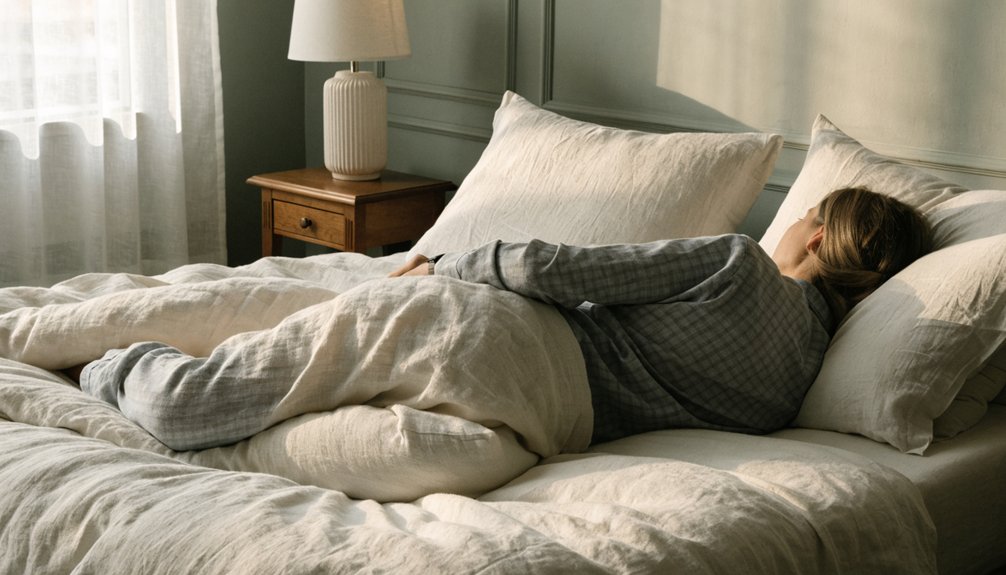
Because your spine spends hours in one position at night, sleep setup can either calm irritated tissues or keep back pain smoldering. Support healing by making rest intentional and rehab-friendly, so tissues unload and muscles relax. Addressing both pain and sleep disturbances together can improve overall sleep quality and support long-term recovery.
- Improve your sleep environment: dark, cool, quiet.
- Use relaxation techniques and stress management before bed.
- Prioritize mattress selection that feels supportive, not overly soft.
- Adjust pillow support to keep neutral sleep positions.
- Keep a consistent bedtime routine; limit daytime napping.
You’ll usually do best lying on your side with a pillow between your knees, or on your back with one under your knees. These positions reduce spinal strain and can make morning stiffness less intense, helping you wake up ready for gentle mobility work and exercise.
Avoid Habits That Make Back Pain Worse
While some back pain triggers are obvious, many flare-ups come from small daily habits that keep loading irritated tissues and limit recovery. Long periods of sitting, slouching, repeated bending, and bracing every movement can increase sensitivity and stiffness. Instead, change positions often, use ergonomic adjustments at your desk, and practice hip hinging when lifting.
You’ll also want to avoid the boom-bust cycle: doing too much on good days, then crashing afterward. Pace activity, keep walks and rehab exercises consistent, and increase volume gradually. Skipping movement entirely can slow healing, so don’t default to bed rest unless your clinician advises it. Small lifestyle changes, like supportive footwear, regular movement breaks, and smarter training form, reduce strain and help your back tolerate daily loads more comfortably. In many jobs, addressing workplace factors such as physical demands, ergonomics, and supervisory support can significantly reduce back pain flare-ups and prevent symptoms from getting worse.
Frequently Asked Questions
Can Stress or Anxiety Make Back Pain Recovery Take Longer?
Yes—stress’s strain and anxiety’s ache can slow your back pain recovery. Their stress impact and anxiety effects may heighten tension, disrupt sleep, and reduce exercise adherence, so you’ll likely heal better with calming strategies and consistent rehab.
How Does Diet Affect Inflammation and Back Pain Healing?
Diet directly affects inflammation and healing: if you emphasize anti inflammatory foods, you’ll support gut health, reduce food sensitivities, and gain omega 3 benefits, which can improve tissue repair, recovery tolerance, and exercise-based back rehabilitation progress.
Are Massage Chairs Helpful or Harmful During Back Pain Recovery?
Couldn’t they help if used wisely? You may get massage chair benefits like temporary relief, but massage chair risks include aggravation if intensity’s high. Pair short sessions with your rehab exercises, and stop if symptoms worsen.
Can Dehydration Contribute to Worsening Back Pain During Recovery?
Yes, dehydration can worsen back pain during recovery; poor hydration levels may reduce disc resilience and increase muscle cramping. You’ll support spinal health by drinking enough fluids, monitoring exercise tolerance, and following your rehabilitation plan.
When Is It Safe to Return to Exercise After Back Pain?
Like a green light, it’s safe when your pain is controlled, movement’s improving, and a clinician clears you. You’ll need exercise modifications and gradual progression, starting low-load and stopping if symptoms intensify or radiate.