
If your back pain is mechanical and not linked to a serious condition, strength training can help you reduce symptoms by improving spinal stability, hip control, and load transfer. Exercises like hip hinges, glute bridges, split squats, and modified core work train the muscles that protect your lumbar spine during daily movement. The key, though, isn’t just what you do. It’s how you do it, and that’s where many programs fail.
Key Takeaways
- Start with symptom-guided loading; mild pain that settles is acceptable, but sharp pain or numbness means stop and get evaluated.
- Hip hinges and elevated deadlift variations build safe load-transfer strength when you keep a neutral spine and controlled range.
- Glute bridges, step-ups, and split squats strengthen hips and glutes, reducing lumbar compensation and improving pelvic stability.
- Modified curl-ups, side planks, and bird dogs improve core endurance to support spinal alignment during daily movement.
- Avoid rounding, overextending, or twisting under load; stack ribs over pelvis and use mirrors or video to check form.
Is Strength Training Safe for Back Pain?

Generally, yes—strength training can be safe for back pain when it’s matched to your symptoms, movement tolerance, and current fitness level. Your spine depends on coordinated support from the trunk, hips, and surrounding connective tissues, so well-dosed loading can improve tissue capacity without aggravating irritated structures. Safety depends on assessment, progression, and symptom response. If pain centralizes, stays mild, and settles after activity, that usually suggests acceptable loading. If it sharply worsens, radiates, or causes numbness, you should scale back and seek evaluation. Evidence-based rehabilitation techniques often combine graded strengthening with mobility exercises to restore lumbar, hip, and thoracic mechanics. You’ll also benefit from attention to bracing, breathing, and pelvic control, since these influence spinal stiffness and force distribution during daily movement. Consistency matters more than intensity. Current clinical guidelines for adult acute and subacute low back pain emphasize evidence-based, progressive exercise as a key part of safe and effective management.
Best Strength Exercises for Back Pain
A small group of exercises tends to work best for back pain because they build tolerance in the muscles that support spinal motion and load transfer: the trunk, glutes, and hips. You’ll usually progress best with controlled, repeatable patterns that load the posterior chain without provoking symptoms.
- Hip hinges with dowel feedback teach neutral hip motion.
- Glute bridges strengthen gluteus maximus, reducing lumbar compensation.
- Split squats build hip stability and pelvic control under load.
- Deadlift variations, especially elevated starts, train load transfer safely.
- Resistance band exercises like lateral walks target glute medius endurance.
Incorporating these strength movements alongside tailored exercises and stretching can further enhance flexibility and support long-term relief from lower back pain. Choose ranges and loads you can recover from within 24 hours. Aim for smooth repetitions, steady breathing, and pain that stays mild and settles quickly. If symptoms peripheralize or spike, reduce depth, load, or tempo immediately that day.
Strengthen Your Core to Support Your Spine
Because your spine depends on muscular stiffness more than brute force, core training for back pain should emphasize coordinated endurance in the abdominal wall, obliques, diaphragm, pelvic floor, and deep spinal stabilizers rather than high-rep flexion exercises. You’ll benefit most from drills that teach core engagement while preserving spinal alignment under light load. Start with the modified curl-up, side plank, and bird dog, progressing only when you can breathe steadily and resist trunk motion without pain. These patterns improve force transfer across your torso, reducing shear stress on lumbar segments. Focus on bracing gently, not hollowing aggressively, so your trunk stays responsive rather than rigid. When you train your core to stabilize instead of repeatedly bend, you build lasting support for daily movement, lifting mechanics, and symptom control over time. Integrating these core stability exercises into a broader routine that includes posture training exercises and regular physical activity helps maintain long-term back health and reduce the risk of future pain.
Build Glute and Hip Strength for Stability
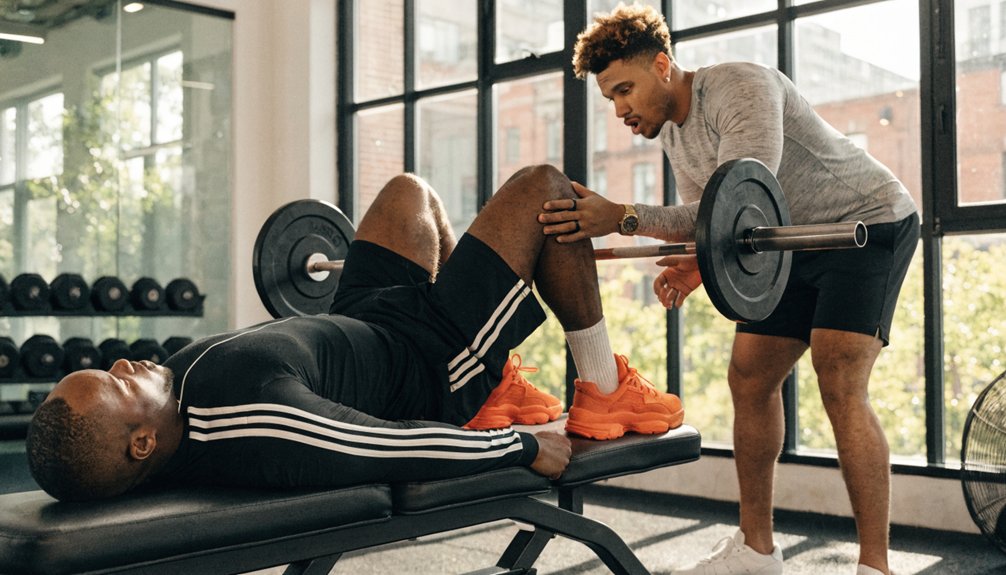
When your glutes and lateral hip muscles do their job, your pelvis stays steadier and your lumbar spine doesn’t have to absorb as much unwanted motion during walking, climbing, or lifting. Building strength here improves force transfer through your hips, reducing compensations that can irritate sensitive back tissues. Prioritize controlled glute activation and hip mobility so surrounding muscles share load efficiently. Strengthening these muscles is a key part of preventing back pain by improving support for the spine and reducing strain on vulnerable structures.
- Glute bridges strengthen hip extension without excessive spinal demand.
- Side-lying leg raises target gluteus medius for pelvic control.
- Step-ups train single-leg stability used in daily movement.
- Banded lateral walks improve frontal-plane hip endurance.
- Hip thrusts build powerful glutes to unload your low back.
You’ll likely notice better balance, smoother gait mechanics, and less strain during bending, carrying, and prolonged standing over time.
Avoid Common Form Mistakes That Trigger Pain
Although strength work can reduce back pain, poor technique can shift load away from the hips and trunk muscles and into irritated spinal tissues. When you squat, hinge, row, or press, keep proper alignment by stacking your ribs over your pelvis and maintaining a neutral spine. Avoid excessive lumbar rounding, overextension, and twisting under load, since those patterns can increase shear and compressive stress. You should also control range of motion and tempo instead of chasing depth or weight. If your hips, thoracic spine, or ankles are stiff, your low back may compensate. Brace your trunk, move from the hips, and stop before pain sharpens. Using mirrors, video, or a coach can help you correct faults early and lower risk of common injuries while building strength safely over time. For more stubborn pain or recurring flare-ups, collaborating with professionals who specialize in personalized chronic back pain care can help you refine technique, address underlying issues, and support long-term progress.