
If you’re recovering from back pain, low-impact exercise can help you stay active without adding unnecessary strain. The right movements support circulation, flexibility, and spinal stability while keeping symptoms manageable. Walking, water exercise, gentle stretching, and controlled cycling are often useful starting points, but your approach matters as much as the activity itself. A few careful choices can support recovery, while others may slow it down.
Key Takeaways
- Start with short, low-impact sessions like 5–10 minutes of walking on flat surfaces, increasing only if symptoms stay manageable.
- Use gentle core exercises such as abdominal bracing and heel slides to improve spinal stability without excessive strain.
- Water exercises can reduce spinal loading while improving circulation, confidence, and controlled movement during recovery.
- If cycling, keep resistance low and adjust the bike for an upright, neutral spine with relaxed shoulders.
- Avoid heavy lifting, deep bending, twisting, or any activity that causes sharp pain or worsened stiffness afterward.
Which Low-Impact Exercises Help Back Pain?
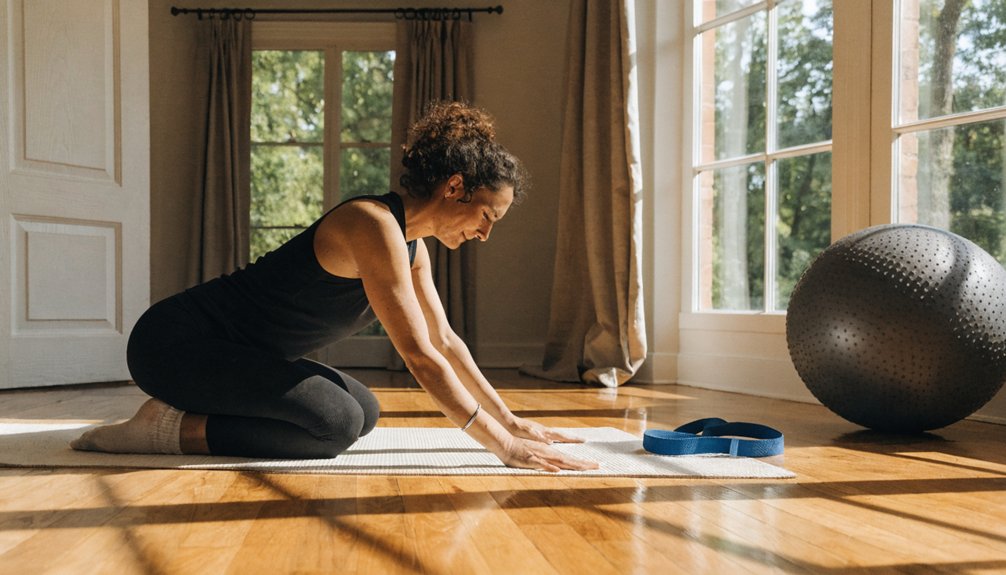
Because the right kind of movement can reduce stiffness without overloading healing tissues, low-impact exercises are often a practical starting point for back pain recovery. Walking is often effective because it improves circulation, supports gentle spinal motion, and helps you maintain tolerance for daily activity without excessive strain.
Water aerobics and swimming can lessen joint loading while allowing controlled movement through a comfortable range. Stationary cycling may also help if you keep your spine neutral and resistance modest. Gentle yoga and Pilates can improve mobility, core endurance, and posture correction when poses remain controlled and pain-free. Basic strength training, such as bodyweight bridges or supported leg raises, may reinforce trunk and hip stability. These options can help you restore function, reduce guarding, and build confidence in movement over time. When combined with tailored exercises and stretching that specifically target tight back muscles, low-impact activities can further enhance flexibility and support long-term back pain relief.
How to Start Back Pain Recovery Safely
Before you begin any exercise routine for back pain recovery, it’s important to start with movements that match your current symptoms, fitness level, and tolerance for activity. Begin slowly, using mindful movement to assess how your back responds during and after activity. You shouldn’t push through sharp pain; instead, use discomfort as a signal to reduce intensity, range, or duration. Effective pain management means pacing yourself, maintaining steady breathing, and allowing recovery between sessions. Starting with gentle low impact exercises like walking or swimming can support your back while reducing strain on painful structures.
- You gain confidence when each movement feels controlled.
- You protect healing tissues by respecting early limits.
- You reduce fear when symptoms stay predictable.
- You build trust in your body with consistent practice.
If pain increases and lasts beyond 24 hours, stop and consult a qualified clinician before progressing further.
Walking for Low-Impact Back Pain Relief
Once you’ve established a safe starting point, walking is often one of the most practical low-impact options for back pain relief. You can control pace, distance, and frequency, making it easier to stay within your tolerance. The benefits of walking include improved circulation, gentle spinal movement, and reduced stiffness. Focus on walking posture: keep your head neutral, shoulders relaxed, core lightly engaged, and steps smooth. Start with short sessions and increase gradually if symptoms remain stable. Regular walking, combined with other personalised exercise programs, can further support spinal health and help prevent future episodes of low back pain.
| Focus | Guidance |
|---|---|
| Pace | Comfortable, steady |
| Duration | Start 5–10 minutes |
| Surface | Flat, even ground |
| Posture | Upright, relaxed |
| Response | Stop if pain worsens |
If you feel mild fatigue, that’s usually acceptable; sharp, radiating, or escalating pain isn’t. Consistency matters more than intensity here most.
Water Exercises for Back Pain Recovery

If walking feels tolerable but still leaves your back sensitive, water exercises can offer a gentler next step by reducing the load on your spine and joints. In chest-deep water, you can practice slow marching, side steps, or controlled leg lifts with less compression and less fear of aggravation. Water therapy supports movement while improving circulation and basic muscular endurance.
- You’ll feel safer because buoyancy benefits reduce body weight and ease pressure.
- You can move more confidently when pain doesn’t spike with each step.
- Your muscles work steadily against water resistance without jarring impact.
- You may regain hope as simple sessions become more comfortable.
Since low back pain can increase absenteeism and reduced productivity, using low-impact options like water exercises may help you stay more active and engaged in daily work and home activities. Keep sessions brief, maintain neutral posture, and stop if symptoms radiate, sharpen, or increase afterward. Consistency matters more than intensity during recovery phases.
Low-Impact Stretches for Back Pain
While your pain is settling, low-impact stretches can help restore mobility without placing extra strain on healing tissues. You should move slowly, stay within a comfortable range, and stop if symptoms sharpen or travel. Controlled breathing can reduce guarding and improve tissue relaxation during each stretch.
Start with gentle neck stretches, shoulder rolls, and side bends to ease upper-back tension. For the lower back, try seated forward bends with your knees slightly bent, allowing your spine and hamstrings to lengthen gradually. A supported knee-to-chest stretch and a reclining figure-four can also improve flexibility around the hips and lumbar area. Hold each position for 15 to 30 seconds without bouncing. If your back feels more irritated afterward, shorten the hold time or reduce the depth next session. Consistency usually matters more than intensity. Low-impact stretching fits well into personalized care plans that combine posture correction, targeted exercises, and other non-surgical therapies for long-term back pain relief.
Low-Impact Core Exercises for Back Pain
Stability is the goal when you begin low-impact core exercises for back pain. You’re training deep abdominal and spinal muscles to improve core stability without provoking symptoms. Start with abdominal bracing, heel slides, and modified dead bugs on a firm surface. Keep your breathing steady, spine neutral, and pelvic alignment controlled throughout each repetition. Supporting your core with regular exercise and healthy weight management can further reduce strain on your spine and help prevent recurring back pain.
- You may feel cautious at first, and that’s normal.
- Small, precise movements can rebuild your confidence.
- Consistency often brings relief you’ve been missing.
- Each controlled repetition supports safer daily movement.
If discomfort increases, reduce range, slow down, or stop. Aim for brief sets with excellent form rather than fatigue. As your tolerance improves, these exercises can help you protect your back during sitting, standing, lifting, and basic household tasks each day.
How to Cycle Without Hurting Your Back
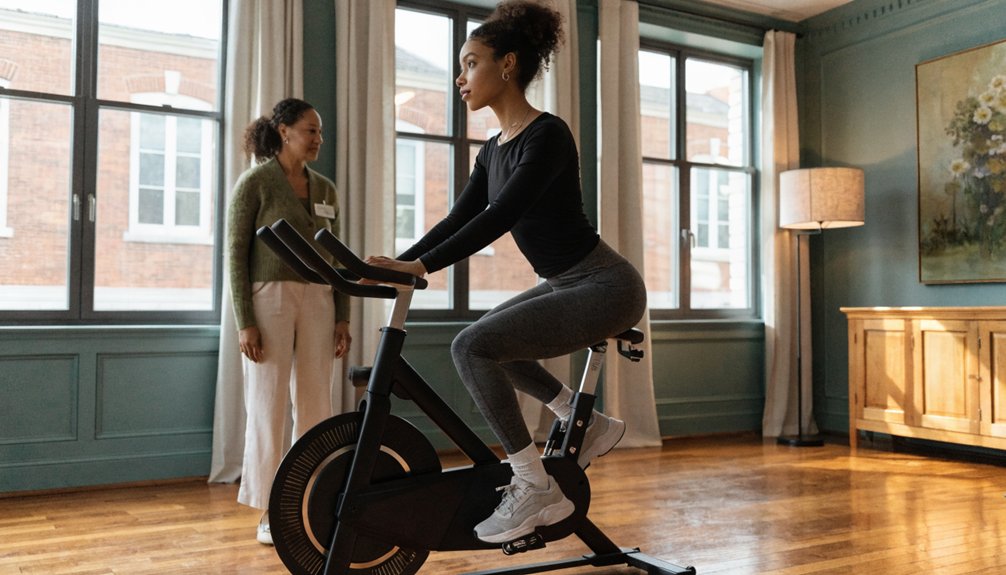
To protect your back while cycling, you’ll need a bike setup that supports a neutral spine and reduces unnecessary strain. You should adjust the seat height, handlebar position, and reach so your posture stays stable and comfortable. Once your bike fits properly, you can focus on a gentle cycling technique with smooth pedaling and controlled effort. Applying proper lifting techniques when you’re off the bike—such as bending at the hips and knees and keeping the load close to your body—also helps protect your back so you can keep cycling comfortably.
Proper Bike Setup
Because bike fit directly affects spinal load, setting your bike up correctly can make cycling far more comfortable during back pain recovery. Start with bike height so your knee stays slightly bent at the bottom of each stroke. Fine-tune seat adjustment to keep your pelvis level and reduce lumbar strain. Raise the handlebar position enough to support an upright riding posture without shoulder tension. Check bike stability before every ride.
- You’ll feel safer when your frame feels steady beneath you.
- You’ll protect healing tissues with balanced alignment.
- You’ll reduce fatigue by matching gear selection to your strength.
- You’ll stay confident by making terrain choice smooth and predictable.
Keep pedal technique light and symmetrical. If discomfort builds, recheck your setup early before pain patterns become harder to calm later.
Gentle Cycling Technique
Once your bike fits well, the way you pedal matters just as much for protecting your back. Keep your cycling posture neutral: hinge slightly at the hips, relax your shoulders, and avoid rounding through your spine. Engage your abdominal muscles gently so your trunk stays steady without becoming rigid.
Use a smooth pedal technique instead of stomping downward. Aim for light, even pressure through the full pedal circle, which reduces jolts that can travel into your lower back. Start with low resistance and a comfortable cadence, then increase effort gradually only if symptoms stay calm. Keep your hands light on the handlebars and your elbows softly bent to absorb vibration. If you notice back tightening, reduce intensity, shorten the session, or pause and reset your form before continuing safely.
Yoga and Pilates for Back Pain Relief
While high-impact workouts can aggravate a sensitive back, yoga and Pilates offer controlled, low-impact movement that can reduce pain, improve flexibility, and strengthen the muscles that support your spine. You’ll benefit most when you move slowly, maintain neutral alignment, and coordinate each motion with steady breathing. Carefully selected yoga poses can decrease muscle tension, while targeted pilates techniques improve core stability and pelvic control. Together, they help you rebuild confidence in daily movement. By improving core strength, posture, and flexibility, these practices can complement other strategies for keeping your back healthy described by your healthcare provider.
- You may feel relief as tight, guarded muscles begin to soften.
- You’ll notice reassurance when your posture feels steadier.
- You can gain hope as simple movements become easier.
- You might experience calm when breath and motion stay synchronized.
Start with brief sessions, use pain-free ranges, and progress gradually to support safe recovery over time.
Exercises to Avoid During Back Pain Flare-Ups
Although staying active can support recovery, certain movements can worsen a back pain flare-up by increasing compression, strain, or sudden instability through the spine. You should avoid pain triggering activities such as heavy lifting, deep forward bends, twisting under load, and rapid sit-ups or toe touches. These motions can aggravate irritated discs, joints, or muscles when tissues are already sensitized. Some movements, especially those that involve bending and twisting, can increase mechanical pain by stressing the spinal structures and surrounding tissues.
You’ll also want to pause high impact sports, including running, basketball, and jumping workouts, because repeated ground force can intensify symptoms. Exercises that demand sudden direction changes or uneven balance may also provoke guarding and spasm. If a movement causes sharp pain, radiating symptoms, or a noticeable increase in stiffness afterward, stop and scale back. Choosing safer options during flare-ups helps protect healing tissues and reduces setbacks during recovery.
How to Build a Low-Impact Back Recovery Routine
After identifying movements that can aggravate a flare-up, the next step is building a routine that keeps you active without overloading healing tissues. Start with short, tolerable sessions and progress gradually. Your goal is consistency, not intensity. Pair gentle walking, supported stretching, and controlled core activation with light strength training to restore stability and confidence. Incorporating physical therapy principles and proper body mechanics can further protect your spine and enhance long-term recovery.
- Begin with 5–10 minutes so your back feels safe, not threatened.
- Choose pain-free ranges that reduce fear and build trust in movement.
- Schedule recovery days to limit irritation and support tissue repair.
- Track symptoms, energy, and posture improvement so you can see real progress.
If discomfort rises sharply, scale back rather than push through. With steady pacing, you’ll improve endurance, protect healing structures, and rebuild daily function with less anxiety and more control.