
You sit, you stiffen, you hurt: prolonged sitting can increase lumbar disc pressure, shorten the hip flexors, and weaken the gluteal and deep core muscles that support your spine. If your back pain builds during desk work, the most effective treatment usually starts with targeted movement, ergonomic correction, and gradual strengthening rather than rest alone. The key is knowing which tissues are driving your symptoms—and which changes actually reduce the load.
Key Takeaways
- Prolonged sitting increases lumbar disc pressure, muscle fatigue, and hip flexor tightness, which commonly trigger lower back pain and stiffness.
- Reduce pain by standing or walking every 30 to 60 minutes instead of remaining in one position all day.
- Improve workstation ergonomics by using lumbar support, keeping feet flat, elbows at 90 degrees, and the monitor at eye level.
- Relieve strain with hip flexor stretches and spinal mobility exercises, holding each stretch 30 to 45 seconds per side.
- Strengthen core and glute muscles with bridges, bird dogs, dead bugs, and side planks to improve spinal stability.
Why Prolonged Sitting Causes Back Pain
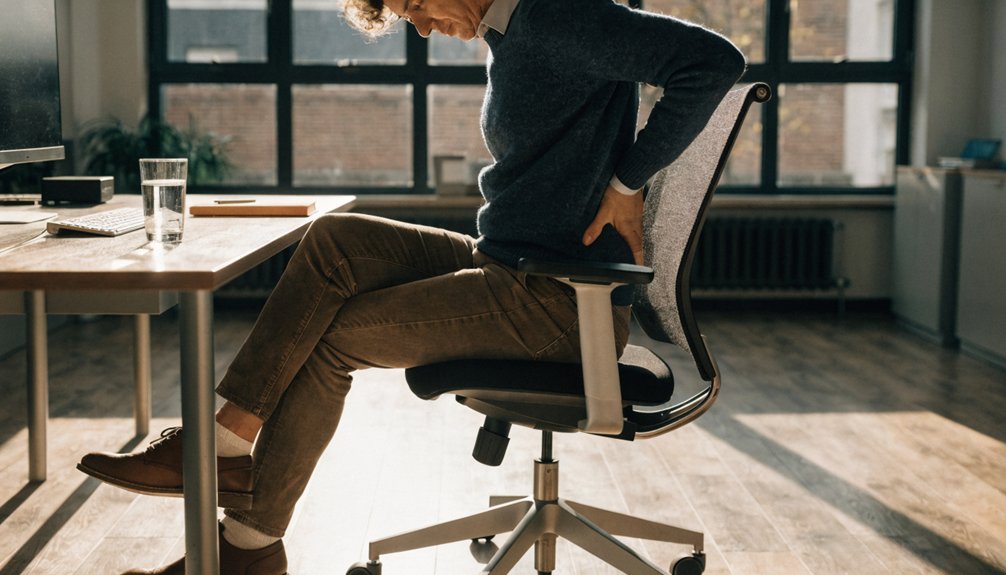
Although sitting seems physically easy, prolonged sitting increases mechanical stress on your lumbar spine, intervertebral discs, and supporting muscles. When you remain flexed, intradiscal pressure rises, paraspinal muscles fatigue, and hip flexors shorten, which can alter pelvic tilt and reduce spinal stability. Over time, decreased movement limits circulation to soft tissues and contributes to stiffness, reduced joint nutrition, and pain sensitivity. Regular exercise improves strength and flexibility, which can counteract these sedentary effects and help prevent back pain.
If you have a sedentary lifestyle, these biomechanical effects accumulate daily. Even with ergonomic furniture, static posture still loads the lower back continuously because your tissues need regular positional change. Slouched sitting also increases thoracic kyphosis and forward head posture, shifting demand onto cervical and lumbar segments. As muscular endurance declines, your body compensates inefficiently, making back pain more likely during work, driving, and screen time.
Back Pain Treatment You Can Start Today
Because static sitting drives tissue stress and muscular fatigue, early treatment should focus on reducing lumbar load, restoring movement, and improving tolerance to sustained posture. You can begin by changing how your workstation supports spinal alignment throughout the day.
Prioritize desk adjustments that place your monitor at eye level, elbows near ninety degrees, and feet fully supported. If available, ergonomic chairs can help maintain neutral pelvic positioning and decrease sustained flexion at the lumbar segments. You should also interrupt sitting every thirty to sixty minutes with brief standing or walking, which improves disc nutrition, circulation, and paraspinal activation. When pain persists, use relative activity modification rather than complete rest, since prolonged inactivity can worsen stiffness and deconditioning. If symptoms radiate, intensify, or include weakness, you should seek a clinical evaluation promptly. Incorporating regular movement into your workday routine not only alleviates stiffness but also supports long-term spinal health and reduces the risk of office-related back pain.
Stretches That Relieve Sitting-Related Back Pain
If you’ve been sitting for long periods, targeted stretching can reduce lumbar stress by addressing common sources of mechanical tension. Hip flexor stretches can help lengthen shortened iliopsoas tissue, which may decrease anterior pelvic tilt and strain on the lower back. Seated spinal twists can improve thoracic mobility and reduce compensatory loading through your lumbar segments. Incorporating stretches into tailored routines that also strengthen the back can provide more effective, long-term relief from sitting-related back pain.
Hip Flexor Stretches
When you sit for long periods, the hip flexors—primarily the iliopsoas and rectus femoris—remain in a shortened position, which can increase anterior pelvic tilt and place added stress on the lumbar spine.
To address this, perform a half-kneeling hip flexor stretch with your pelvis in slight posterior tilt and your trunk upright. You should feel lengthening at the front of the trailing hip, not compression in your low back. Hold 30 to 45 seconds, repeat two to three times per side. Understanding basic hip flexor anatomy helps you target the psoas, iliacus, and rectus femoris more accurately. These stretches can improve tissue extensibility, normalize pelvic positioning, and reduce compensatory lumbar extension. Over time, the flexibility benefits may include decreased sitting-related stiffness, improved gait mechanics, and better tolerance for standing and walking.
Seated Spinal Twists
Although prolonged sitting tends to stiffen the thoracic spine and surrounding paraspinal tissues, seated spinal twists can help restore segmental rotation and reduce compensatory motion through the lumbar region. To perform them effectively, maintain neutral seated alignment, elongate through your spine, and rotate from your rib cage rather than forcing end-range lumbar motion.
- Set up: Plant both feet, engage your lower abdomen, and keep your pelvis stable.
- Rotate: Exhale as you turn gently, using your hand for light leverage without jerking.
- Hold: Stay for 15 to 30 seconds, breathing diaphragmatically, then repeat bilaterally.
This stretch may improve spinal mobility, decrease myofascial tension, and reduce postural strain from desk work. If you feel sharp pain, radiating symptoms, or dizziness, stop and seek clinical guidance promptly.
Strength Exercises for Long-Term Back Pain Relief
Because prolonged sitting weakens the gluteal, abdominal, and paraspinal muscles that help stabilize your spine, strength exercises are a central part of long-term back pain management. You’ll benefit most from targeted resistance training that improves core stability and pelvic control. Prioritize slow, pain-free movements.
Consistently incorporating these exercises into a broader routine that includes posture training, flexibility work, and general physical activity can further reduce pain and prevent future episodes.
| Exercise | Primary target |
|---|---|
| Glute bridge | Gluteus maximus |
| Bird dog | Multifidus, abdominals |
| Dead bug | Transversus abdominis |
| Side plank | Obliques, quadratus lumborum |
These exercises build endurance in spinal stabilizers, reduce excessive lumbar motion, and improve load distribution through your hips and trunk. Start with one to two sets of eight to twelve repetitions, or brief holds, three times weekly. If symptoms peripheralize, stop and consult a clinician or physical therapist for individualized progression and monitoring.
How to Fix Your Sitting Posture and Setup
Why does sitting trigger pain so reliably? Prolonged flexion increases disc pressure, deactivates gluteal muscles, and overloads lumbar ligaments. To reduce strain, you should align your workstation so your spine stays near neutral and your joints rest at mid-range. Incorporating tailored ergonomic solutions into your daily sitting routine can help minimize spinal strain and support long-term back health.
- Sit back fully in ergonomic chairs so the backrest contacts your thoracic spine; use lumbar support to preserve the natural lordotic curve.
- Keep hips slightly higher than knees, feet flat, and elbows near 90 degrees; this reduces pelvic tuck and shoulder elevation.
- Position your monitor at eye level and keyboard close, so you don’t protrude your head or round your upper back.
Reset posture every 20 to 30 minutes. Small adjustments consistently lower cumulative mechanical stress and improve tissue tolerance over time during workdays.
When Back Pain Treatment Should Include a Doctor
If your pain persists despite workstation changes and movement breaks, back pain treatment should include a physician when symptoms suggest more than mechanical irritation from prolonged sitting. Red flags include progressive leg weakness, saddle anesthesia, bowel or bladder dysfunction, fever, unexplained weight loss, night pain, or pain after significant trauma. You should also seek evaluation when lumbar pain radiates below the knee, causes numbness, or limits walking, because nerve root compression, spinal stenosis, fracture, infection, or inflammatory disease may be involved. A physician can perform a neurologic and musculoskeletal examination, assess dermatomal deficits, reflex changes, and motor loss, and determine whether imaging or laboratory studies are indicated. Based on findings, treatment options may include medication, physical therapy, injections, or referral for urgent specialist care when needed promptly. Early medical assessment of persistent back pain supports personalized treatment that can prevent long-term complications and improve overall spine health.
Frequently Asked Questions
Can Prolonged Sitting Back Pain Affect Sleep Quality?
Yes, prolonged sitting back pain can disrupt your sleep quality by increasing lumbar muscle tension and nociceptive signaling, altering sleep patterns. You’ll often improve symptoms by addressing spinal alignment, mattress quality, and nocturnal positioning.
Are Standing Desks Always Better for Back Pain?
No, standing desks aren’t always better for back pain; you’d benefit most from alternating positions, using ergonomic chairs, and prioritizing posture correction. Sustained static loading can still stress lumbar discs, paraspinals, hips, and lower-limb joints.
Can Dehydration Make Sitting-Related Back Pain Worse?
Yes, dehydration can worsen sitting-related back pain; hydration impact affects disc nutrition and soft-tissue elasticity, while inadequate fluids may increase muscle tension, reducing lumbar support. You’ll likely feel stiffness sooner and recover more slowly afterward.
Do Certain Shoes Contribute to Back Pain While Sitting?
Yes, certain shoe types and excessive heel height can contribute to back pain while sitting; they alter pelvic tilt, lumbar lordosis, and hamstring tension, so you’ll often reduce spinal loading by choosing flatter, supportive footwear.
Can Stress Increase Back Pain Caused by Prolonged Sitting?
Yes—though it’s not “just in your head,” stress can heighten lumbar muscle tension, pain sensitivity, and postural strain during sitting. You’ll benefit from stress management because improved emotional wellbeing can reduce nociceptive amplification and guarding.