
If your back hurts, mobility and flexibility work can change how load moves through your spine, hips, and trunk. You don’t need aggressive stretching; you need controlled motion that restores thoracic rotation, hip extension, and hamstring length without provoking symptoms. When these areas move better, your lumbar segments often stop doing too much. The key is knowing which drills help, which ones irritate tissue, and how to build them into a routine that actually reduces pain.
Key Takeaways
- Mobility exercises improve spinal and pelvic force distribution, reducing stress on the lower back and limiting painful compensation.
- Flexibility training restores hip, trunk, and pelvic balance, helping reduce lumbar strain during daily movement.
- Effective mobility drills include cat-camel, quadruped thoracic rotations, 90/90 hip switches, and pelvic tilts performed in pain-free ranges.
- Gentle stretches for hip flexors, glutes, hamstrings, and calves should be held 20 to 30 seconds without increasing pain.
- A simple 8 to 12 minute routine with steady breathing and symptom tracking supports consistent relief and safer progression.
How Mobility Exercises Help Back Pain

Because stiff hips, thoracic spine, and surrounding soft tissues can increase mechanical stress on your lumbar segments, mobility exercises can help reduce back pain by improving how force is distributed through the spine and pelvis during daily movement. When your hips extend and rotate better, your lower back doesn’t have to compensate excessively during bending, lifting, or walking. You should target hip flexors, glutes, thoracic rotation, and hamstring glide with controlled drills like 90/90 shifts, cat-cow, open books, and half-kneeling hip movements. These movements improve posture alignment by restoring joint motion needed for neutral pelvic positioning. They also support core strength, because your trunk muscles can brace more efficiently when adjacent joints move well. Perform slow, pain-limited repetitions, exhale fully, and prioritize quality over range or speed each session. Over time, combining these drills with regular exercise and other lifestyle adjustments helps maintain long-term back health and reduce the risk of recurrent pain.
Why Flexibility Matters for a Healthy Back
While flexibility won’t fix every case of back pain, it does matter because shortened muscles and restricted connective tissue can alter pelvic position, limit hip motion, and increase strain on the lumbar spine during sitting, bending, and lifting.
If your hip flexors, hamstrings, glutes, or thoracolumbar fascia stay stiff, your spine often compensates with excess motion where stability should dominate. That’s why flexibility benefits aren’t just about feeling looser; they help restore joint mechanics, improve load distribution, and support muscle balance between the hips, trunk, and pelvis. Better extensibility in surrounding tissues can reduce pulling forces on the low back and make neutral alignment easier to maintain. You’ll get the most value when flexibility work targets specific restrictions that affect movement quality, not when you stretch aggressively or without purpose first. Consistent flexibility training, alongside personalized exercise programs, can further support spinal health and help prevent recurrent episodes of low back pain.
Try These Mobility Exercises for Back Pain
If your back feels stiff or irritated, targeted mobility drills can help by restoring motion to the hips, thoracic spine, and pelvis so your lumbar segments don’t have to compensate with excessive movement. Start with cat-camel for 8 slow reps, then perform quadruped thoracic rotations, 6 per side, keeping your pelvis quiet. Add 90/90 hip switches for 10 controlled adjustments to improve internal and external rotation. Finish with pelvic tilts, 10 to 12 reps, to retrain lumbopelvic control without loading irritated tissues. These aren’t stretching techniques; they’re active drills that improve joint mechanics and neuromuscular coordination. Use pain-free ranges, move with steady breathing, and practice them in daily routines, especially after prolonged sitting. Consistency matters more than intensity when you’re restoring motion and reducing protective stiffness. These drills work best as part of a personalized care plan that also considers posture, muscle tightness, and other root causes of chronic back pain.
Add Flexibility Exercises Without Making Pain Worse
Although flexibility work can help reduce tension around the hips and hamstrings, it shouldn’t force your lumbar spine into painful end ranges. Focus on gentle stretching that targets the hip flexors, glutes, hamstrings, and calves while keeping your trunk neutral and supported. Use positions like a half-kneeling hip flexor stretch, supine hamstring stretch with a strap, and figure-four glute stretch. Hold each stretch for 20 to 30 seconds, breathe slowly, and stop before symptoms increase, spread, or linger. You should feel muscular tension, not sharp, burning, or electrical pain. Pair flexibility drills with mindful movement so your pelvis, ribs, and abdominal wall stay coordinated. If a stretch increases back pain, reduce range, add support, or switch to a more tolerable variation that protects irritated spinal tissues. When flexibility drills are combined with tailored exercises and, where appropriate, myotherapy, they can more effectively address muscle tightness and support long-term back health.
Build a Back Pain Routine That Sticks
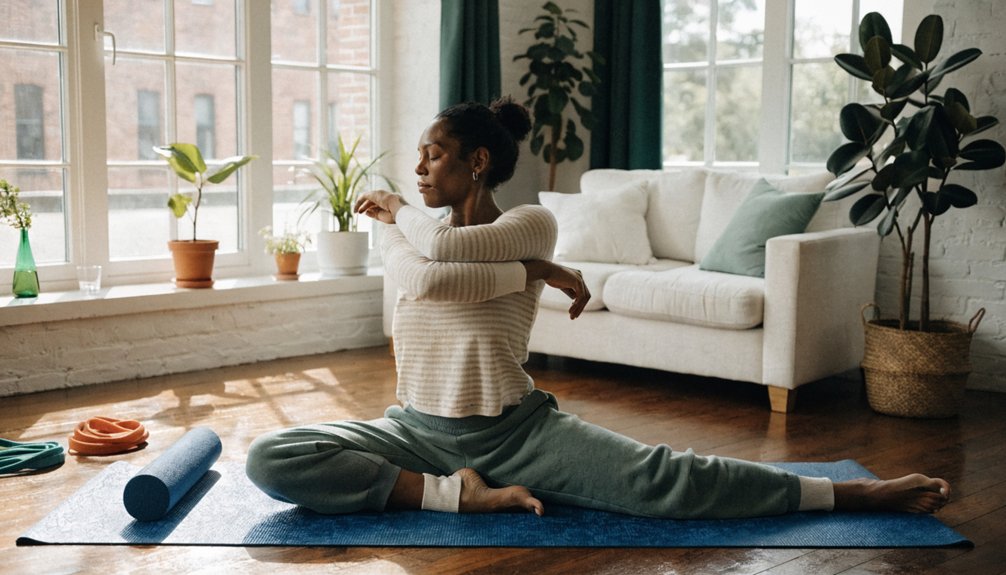
Because consistency changes tissues more than occasional hard efforts, your back pain routine should be simple enough to repeat on most days and specific enough to support the hips, trunk, and spine. Start with 8 to 12 minutes: cat-camel, hip flexor stretch, thoracic rotation, glute bridge, and side plank. Perform 1 to 2 sets, using smooth breathing and pain levels no higher than mild. To prevent age-related changes, combine this routine with regular movement breaks during long periods of sitting or standing.
To improve routine consistency, attach the session to an existing cue, like brushing your teeth or finishing a walk. Alternate mobility and stability so lumbar joints aren’t overloaded while the abdominals, glutes, and deep spinal muscles build endurance. Track symptoms, stiffness, and recovery for two weeks, then progress one variable at a time. That structure helps reduce back pain without relying on motivation alone or setbacks.
Frequently Asked Questions
Can Poor Sleep Habits Make Back Pain Worse?
Yes—your poor sleep habits can worsen back pain; sleep quality strongly affects your spine’s tissue recovery, muscle tension, and inflammation. This pain correlation means you’ll benefit from consistent sleep timing, supportive positioning, and daily mobility exercise.
When Should Back Pain Be Evaluated by a Doctor?
You should see a doctor immediately if pain follows trauma, weakness, numbness, fever, or bladder changes; 80% experience back pain, but early intervention helps prevent chronic pain and protects spinal nerves, discs, and stabilizing muscles.
Do Shoes or Orthotics Affect Chronic Back Pain?
Yes—your shoes and orthotics can affect chronic back pain by changing foot alignment and posture impact. Better shoe support and orthotic benefits may reduce spinal stress; you should pair them with calf, hip, and core exercises.
Can Stress or Anxiety Contribute to Back Pain?
Yes—like a violin string wound too tight, your stress and anxiety can tense paraspinals, brace your diaphragm, and amplify pain. Prioritize stress relief, anxiety management, diaphragmatic breathing, thoracic mobility, and graded core exercise daily.
Are Heat or Ice Better Before Stretching Exercises?
Heat application is usually better before stretching techniques, because it increases blood flow and tissue extensibility around muscles and fascia. You’d use ice therapy afterward for recovery benefits if inflammation, soreness, or acute irritation develops.