
Chronic back pain can feel constant, yet its causes are often mechanically specific. If you have persistent lumbar discomfort, conservative treatment usually starts with targeted exercise, physical therapy, activity modification, and selective medication use to reduce tissue stress and improve spinal function. You may also need evaluation for neurologic signs, inflammatory disease, or structural pathology before symptoms worsen. The next step is knowing which options fit your pain pattern and which don’t.
Key Takeaways
- Conservative treatment combines activity modification, therapeutic exercise, posture correction, and manual therapy to reduce pain and improve spinal function.
- Physical therapy builds lumbar stability, hip mobility, and trunk endurance through individualized programs targeting movement limitations and muscle imbalance.
- At-home care may include gentle stretching, core strengthening, walking, heat or ice, and ergonomic adjustments to reduce daily strain.
- Progress should be gradual and measurable, advancing from movement control and flexibility work to resistance exercises as symptoms improve.
- Seek medical evaluation for persistent pain, worsening symptoms, numbness, weakness, bowel or bladder changes, fever, or unexplained weight loss.
What Conservative Treatment for Back Pain Means

Although the term can sound broad, conservative treatment for back pain refers to non-surgical, non-invasive care used to reduce pain, restore function, and support normal movement of the spine, surrounding muscles, intervertebral discs, and adjacent nerves. In practice, you’re targeting mechanical stress, inflammation, muscle imbalance, and impaired mobility without procedures. This usually includes graded activity, therapeutic exercise, posture correction, and manual therapy to improve load distribution across vertebrae, facet joints, discs, and paraspinal tissues. You may also use self care strategies such as heat, paced movement, sleep positioning, and ergonomic changes to limit symptom provocation. Some plans incorporate alternative therapies, including acupuncture or yoga, when evidence and tolerance support them. The goal isn’t simply pain reduction; it’s helping you move more efficiently while supporting tissue recovery and long-term spinal function. Regular, personalized exercise programs that build core strength and flexibility are a key conservative strategy for preventing recurrent low back pain and supporting long-term spinal health.
When Chronic Back Pain Needs Medical Evaluation
While many cases of persistent back pain respond to conservative care, chronic symptoms need medical evaluation when they last beyond several weeks, worsen despite appropriate treatment, or are accompanied by red-flag findings that suggest structural, neurologic, infectious, inflammatory, or systemic disease. You should seek assessment if you develop progressive leg weakness, saddle anesthesia, bowel or bladder dysfunction, fever, unexplained weight loss, night pain, or pain after significant trauma. Focal tenderness over vertebrae may indicate fracture; radicular pain, reflex changes, or dermatomal numbness can suggest nerve-root compression. Your clinician may order diagnostic imaging when history or examination indicates disc herniation, spinal stenosis, malignancy, or infection. Laboratory testing and specialist referrals may be appropriate when inflammatory spondyloarthropathy, osteoporosis, or nonspinal causes are suspected. Early medical evaluation of persistent back pain can help prevent long‑term complications and support more effective treatment.
Physical Therapy for Chronic Back Pain Relief
Physical therapy can help you reduce chronic back pain by improving lumbar stability, hip mobility, and trunk muscle endurance through targeted exercise programs. Your treatment may also include manual therapy techniques, such as joint mobilization and soft tissue work, to address restricted spinal movement and paraspinal muscle tension. When matched to your symptoms and functional limits, these interventions can support pain control, movement efficiency, and daily activity tolerance. In addition to these interventions, your physical therapist can provide education on body mechanics and posture to help prevent re-injury and support long-term back health.
Targeted Exercise Programs
Build a targeted exercise program around the specific structures and movement patterns contributing to your pain, rather than using a generic routine. You’ll benefit most when exercise matches your impairments: segmental instability, hip weakness, limited thoracic mobility, or poor lumbopelvic control. Evidence supports targeted strength work for the deep trunk stabilizers, gluteals, and hip abductors when deficits are present.
Your physical therapist may design personalized routines that dose loading, tempo, and range according to symptom behavior and tissue tolerance. For flexion-sensitive pain, you might emphasize hip hinging, abdominal bracing, and neutral-spine endurance. For extension intolerance, you may need graded flexion, hamstring mobility, and core coordination. Progression should be measurable, moving from motor control to resistance and functional patterns that improve walking, lifting, and sustained sitting.
Manual Therapy Techniques
Use manual therapy as an adjunct to exercise when joint stiffness, myofascial restriction, or pain-related guarding limits your movement. It can reduce nociceptive input, improve segmental mobility, and restore more efficient lumbar-pelvic mechanics during rehabilitation.
- Mobilization targets hypomobile facet joints and thoracolumbar segments.
- Manipulation, including chiropractic adjustments, may provide short-term analgesia.
- Myofascial release addresses paraspinal, quadratus lumborum, and gluteal tension.
- Soft-tissue techniques can decrease guarding and improve hip extension.
- Traction has limited evidence, so it’s used selectively.
You shouldn’t rely on passive care alone. Instead, your therapist should pair hands-on treatment with motor-control retraining, trunk endurance work, and graded exposure. When selected by examination findings, manual therapy can help you tolerate loading, normalize movement, and progress exercise more effectively.
Exercise for Chronic Back Pain at Home
At home, you can use a gentle stretching routine to improve mobility in the lumbar spine, hips, and hamstrings while reducing mechanical strain on supporting tissues. You’ll also benefit from core strength exercises that target the transverse abdominis, multifidus, and gluteal muscles to improve spinal stability. When performed consistently and with proper form, these exercises can help reduce chronic back pain and support functional movement. In addition, incorporating tailored routines that address muscle tightness and strengthen back muscles can promote long-term relief and sustainable back health.
Gentle Stretching Routine
Relief often starts with gentle, low-load stretching that improves mobility in the lumbar spine, hips, and hamstrings without provoking pain. You should move slowly, stay within a tolerable range, and coordinate breathing to reduce paraspinal guarding. Evidence suggests consistent flexibility work may decrease stiffness and improve function, especially when paired with mindfulness techniques and selected yoga benefits.
- Posterior pelvic tilts mobilize lumbar segments.
- Single-knee-to-chest targets gluteal and lower lumbar tissues.
- Supine hamstring stretches reduce posterior chain tension.
- Hip flexor stretches address anterior pelvic pull.
- Child’s pose can unload lumbar facets gently.
Hold each stretch 15 to 30 seconds, repeat two to four times, and stop if symptoms peripheralize. You’re aiming for improved tissue extensibility, not forceful range gains. Track post-session pain, stiffness, and movement quality daily.
Core Strength Exercises
Three foundational core exercises can help reduce chronic back pain at home by improving trunk stability, load distribution, and neuromuscular control without excessive spinal motion. Start with abdominal bracing in hook-lying: gently tighten your transverse abdominis while breathing normally for ten-second holds. Next, perform the bridge, lifting your pelvis until your hips align with your knees and shoulders; this recruits gluteus maximus and supports posture correction. Third, use the bird-dog, extending opposite arm and leg while keeping your lumbar spine neutral to challenge multifidus activation and balance training. You should move slowly, avoid pain provocation, and maintain diaphragmatic breathing throughout each repetition. Complete one to two sets of eight to twelve repetitions, three to five days weekly, progressing only when form, endurance, and symptom response remain consistently controlled.
Medications That Can Ease Back Pain
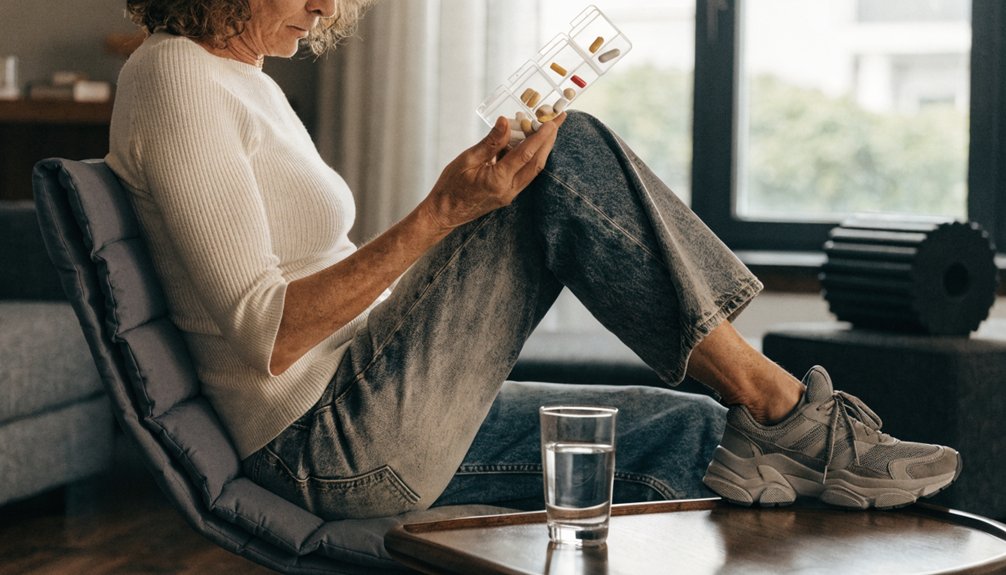
Because back pain can arise from inflamed soft tissues, irritated nerve roots, or muscle spasm, medication choices work best when they’re matched to the underlying pain mechanism.
- NSAIDs are over the counter options that reduce prostaglandin-driven inflammation in paraspinal muscles and facet joints.
- Acetaminophen may help mild pain, though evidence for chronic lumbar pain management is limited.
- Prescription medications, including short-term muscle relaxants, can decrease painful guarding from lumbar spasm.
- Neuropathic agents may target radiating pain when compressed nerve roots cause burning, tingling, or shooting symptoms.
- Topical treatments, such as diclofenac gel or lidocaine patches, deliver local relief with less systemic exposure.
You should review dosing, gastrointestinal, renal, hepatic, and sedating risks with your clinician, especially if symptoms persist, worsen, or include weakness. A personalized treatment plan that thoughtfully combines medications with therapies like physical therapy or myotherapy can improve mobility and long-term back pain control.
Heat, Ice, and Other At-Home Back Pain Relief
Medications can reduce pain signaling, but simple home measures often help by addressing the tissues generating symptoms. For acute flare-ups, ice can limit superficial inflammation and numb nociceptors in strained paraspinal muscles or irritated ligaments. For stiffness, heat may improve local blood flow, reduce muscle guarding, and increase soft-tissue extensibility. Hot cold therapy is often most useful when matched to your dominant symptom pattern. You may also benefit from incorporating gentle physical therapy–style exercises at home to gradually strengthen supporting muscles and improve posture between flare-ups.
You can also try brief self massage techniques over the lumbar paraspinals, quadratus lumborum, and gluteal muscles to decrease myofascial tenderness. Use tolerable pressure, not aggressive force. Topical analgesics may provide short-term relief through counterirritant or anti-inflammatory effects. If symptoms worsen, radiate below the knee, or include weakness or numbness, you should seek medical evaluation promptly soon.
Lifestyle Changes That Support Spinal Health
Although no lifestyle habit can correct every source of back pain, daily behaviors strongly influence spinal loading, disc nutrition, muscle endurance, and pain sensitivity. To support spinal health, you should prioritize:
- An ergonomic workplace that keeps your hips, knees, and elbows near ninety degrees.
- Mindful movement during lifting, bending, and shifts to reduce shear forces.
- Regular walking, which promotes paraspinal endurance, circulation, and intervertebral disc exchange.
- Sleep positions that maintain neutral cervical and lumbar alignment with pillow support.
- Body weight management, since excess mass increases compressive load across lumbar segments.
You’ll also benefit from stopping smoking, staying hydrated, and interrupting prolonged sitting every thirty to sixty minutes. These modifications won’t reverse structural pathology, but they can improve biomechanics, tissue tolerance, and symptom control over time. Integrating ergonomic furniture and regular movement into your daily routine further supports spinal alignment and helps prevent workspace-related back pain.
Injections and Other Nonsurgical Back Pain Treatments
When exercise, activity modification, and ergonomic changes don’t provide adequate relief, nonsurgical interventions such as spinal injections, manual therapy, and targeted rehabilitation may help reduce pain and improve function. Your clinician may match treatment to the pain generator—facet joints, nerve roots, sacroiliac joints, or myofascial tissues.
| Treatment | Clinical focus |
|---|---|
| Epidural steroid | Inflamed nerve root |
| Facet injection | Zygapophyseal joint pain |
| SI joint injection | Sacroiliac-mediated pain |
Common injection types include epidural, facet, and sacroiliac injections, often guided by fluoroscopy or ultrasound for anatomical accuracy. You might also benefit from spinal manipulation, soft-tissue mobilization, or McKenzie-based rehabilitation when movement patterns contribute to symptoms. Recovery timelines vary: anesthetic relief may be immediate, steroid effects often begin within days, and functional gains from manual therapy usually accumulate over several sessions. Recommendations in modern guidelines for low back pain, such as the ICSI’s evidence-based practices, are regularly updated to keep nonsurgical treatment approaches clinically relevant.
How to Build a Conservative Back Pain Plan

Because back pain often arises from more than one pain generator, a conservative plan works best when it’s built around your symptom pattern, functional limits, neurologic findings, and likely anatomical source—disc, facet joint, sacroiliac joint, nerve root, or paraspinal soft tissue.
- Track pain location, triggers, and morning stiffness.
- Match exercise dosage to tolerance and directional preference.
- Add core, hip, and thoracolumbar endurance training.
- Use sleep, stress control, and mind body connection strategies.
- Reassess gait, reflexes, strength, and flexibility regularly.
You’ll get better results when treatment targets biomechanics and tissue irritability, not pain alone. Evidence supports combining activity modification, physical therapy, anti-inflammatory measures, and holistic approaches that improve load distribution, motor control, and recovery. Your plan should progress gradually, with objective benchmarks tied to walking, lifting, sitting tolerance, and function. Incorporating personalized care from collaborative health professionals can further optimize long-term back pain management outcomes.
Signs Conservative Back Pain Treatment Isn’t Enough
If your back pain persists or worsens despite activity modification, exercise, and medication, the pain generator may require further medical evaluation. New numbness, radiating symptoms, or measurable weakness can indicate nerve root or spinal cord involvement rather than isolated muscular strain. If pain is limiting walking, sleep, work, or basic self-care, you shouldn’t assume conservative treatment is still adequate. Because motor vehicle accidents account for a large share of serious spinal injuries, any chronic back pain that follows a crash warrants prompt imaging and specialist assessment to rule out structural damage.
Persistent Or Worsening Pain
Although most mechanical back pain improves with time, persistent or worsening pain despite appropriate conservative care can indicate that the underlying pain generator hasn’t been adequately addressed. You may need reassessment to clarify spinal anatomy, tissue loading, and causes of pain affecting pain management.
- Pain lasting beyond six to twelve weeks despite adherence
- Increasing intensity with sitting, standing, extension, or rotation
- Night pain or rest pain suggesting nonmechanical pathology
- Localized tenderness over facets, sacroiliac joints, or discs
- Reduced function despite therapy, exercise progression, and medication
These patterns can reflect discogenic irritation, facet arthropathy, sacroiliac dysfunction, inflammatory conditions, or occult structural lesions. If your symptoms escalate rather than stabilize, your clinician may recommend updated imaging, diagnostic injections, or specialist evaluation to better target treatment and prevent prolonged sensitization.
New Numbness Or Weakness
When new numbness, tingling, or weakness develops during a course of conservative care, it raises concern that a spinal nerve root, the cauda equina, or another neurologic structure may be under increasing mechanical or inflammatory compression rather than simply generating pain.
You shouldn’t assume these symptoms are routine. A focused numbness assessment looks at dermatomal sensory loss, asymmetry, reflex changes, gait disturbance, and bowel or bladder symptoms. New weakness causes include progressive disc herniation, foraminal stenosis, epidural mass effect, or severe central canal narrowing affecting motor fibers. If you notice foot drop, difficulty heel- or toe-walking, reduced grip, or spreading sensory deficits, your clinician may need urgent imaging and neurologic examination. These findings can indicate evolving nerve compromise, where delaying escalation risks persistent deficit despite continued conservative management alone.
Limited Daily Function
Even without dramatic neurologic symptoms, back pain that starts limiting basic daily function can signal that conservative treatment isn’t adequately controlling the underlying mechanical or inflammatory problem.
- You avoid bending, lifting, or twisting.
- Sitting or standing tolerance keeps shrinking.
- Sleep is disrupted by positional pain.
- Walking distance drops because guarding increases.
- work limitations begin affecting reliability.
When pain restricts daily activities despite medications, exercise therapy, and activity modification, your lumbar discs, facet joints, sacroiliac joints, or paraspinal musculature may remain pain generators. Persistent functional decline suggests ongoing nociceptive input, biomechanical instability, or inflammatory sensitization rather than a simple, self-limited strain. If dressing, bathing, driving, or climbing stairs become consistently difficult, you shouldn’t assume more time alone will solve it. Reassessment can clarify whether imaging, interventional care, or specialist evaluation is warranted.
Frequently Asked Questions
Can Weather Changes Make Chronic Back Pain Feel Worse?
Yes—when the weather shifts, your chronic back pain can feel worse; weather sensitivity may alter joint capsule pressure, muscle tension, and nerve irritation. Effective pain management includes tracking patterns, staying active, and adjusting posture.
How Does Chronic Back Pain Affect Sleep Quality?
Chronic back pain disrupts your sleep quality by triggering sleep disturbances through nocturnal nociceptive signaling, muscle guarding, and difficulty finding spinal comfort. You may experience fragmented sleep, reduced restorative stages, and need targeted pain management strategies.
Can Chronic Back Pain Impact Mental Health Over Time?
Yes—chronic back pain can, and often does, affect your mental health over time; persistent nociceptive signaling disrupts sleep, stress regulation, and cortical processing, making pain management harder and gradually weakening your emotional resilience and coping.
Are Ergonomic Mattresses Helpful for Chronic Back Pain?
Yes, ergonomic mattresses can help if you match mattress firmness to your spinal alignment and sleep posture. You’ll usually benefit most when lumbar support reduces nocturnal strain, though evidence suggests comfort and individual biomechanics determine outcomes.
Does Prolonged Sitting Worsen Chronic Back Pain Symptoms?
Absolutely—like a telegram from your spine, prolonged sitting can worsen chronic back pain symptoms by increasing lumbar disc pressure, paraspinal muscle stiffness, and hip flexor shortening; you’ll benefit from posture correction and regular movement breaks daily.