
Coincidentally, the same factors that trigger your recurring lower back pain often shape the treatment that helps most. You can’t rely on one fix, because persistent flare-ups usually involve movement patterns, muscle weakness, workload, and pain sensitivity. Effective care starts with identifying the cause, then matching it to exercise, physical therapy, daily habit changes, or medical treatment. The key is knowing which approach fits your pattern—and when it signals something more serious.
Key Takeaways
- Start with self-care: brief relative rest, walking, heat, and short-term NSAIDs or acetaminophen can reduce recurring lower back pain flare-ups.
- Physical therapy helps identify mechanical triggers and uses targeted exercises, manual therapy, and education to improve function and prevent recurrence.
- Prevent future episodes by alternating sitting and standing, taking walking breaks, stretching gently, and using proper lifting mechanics.
- Seek medical evaluation if pain persists for weeks, worsens, or causes leg weakness, groin numbness, or bladder or bowel changes.
- Imaging, specialist referral, or options like acupuncture or spinal manipulation may be considered when symptoms persist or specific warning signs appear.
What Causes Recurring Lower Back Pain?
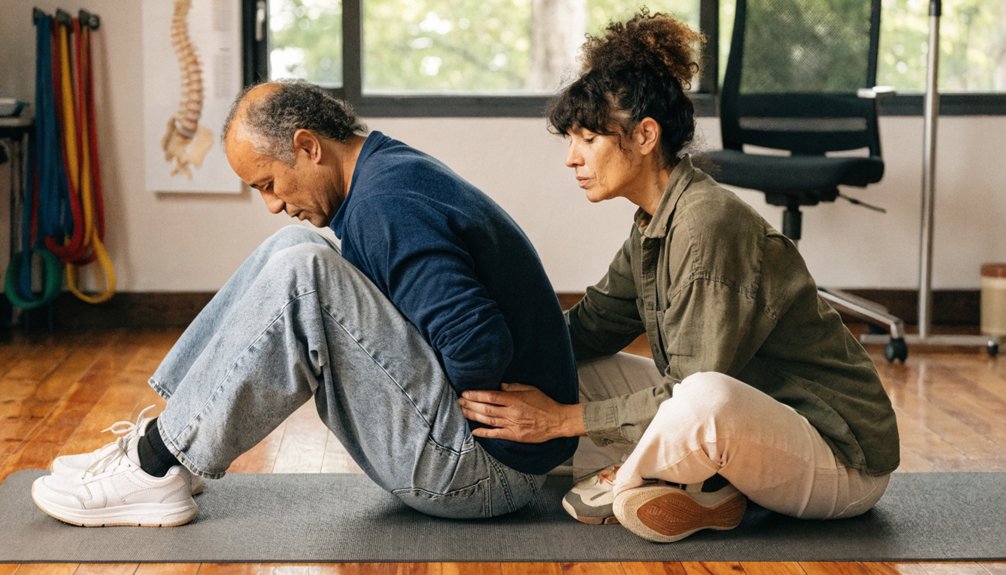
Although recurring lower back pain can feel unpredictable, it usually reflects an underlying mechanical, degenerative, or lifestyle-related factor rather than a single isolated injury. Often, repeated bending, prolonged sitting, weak trunk musculature, or poor lifting mechanics create cumulative stress on discs, joints, ligaments, and paraspinal tissues. You may experience flare-ups when a muscle strain hasn’t fully healed or when altered movement patterns continue loading sensitive structures.
Degenerative disc changes, facet joint irritation, and reduced hip mobility can also disturb spinal alignment and increase segmental stress. Excess body weight, deconditioning, sleep disruption, and occupational vibration further heighten recurrence risk. In some cases, pain persists because your nervous system becomes sensitized, making ordinary mechanical inputs feel more threatening. Understanding how a sedentary lifestyle weakens supporting muscles and alters posture can further explain why lower back pain episodes tend to recur over time. Identifying these contributors helps guide targeted management and reduce repeated episodes over time.
When Lower Back Pain Needs a Doctor
Most lower back pain improves with conservative care, but some symptoms mean you shouldn’t wait to seek medical evaluation. You need prompt assessment if you have severe or worsening pain, leg weakness, numbness in the groin, loss of bladder or bowel control, fever, unexplained weight loss, or pain after significant trauma. These warning signs can indicate nerve compression, infection, fracture, or other serious pathology that requires urgent evaluation. In some cases, a timely medical review allows you to explore both non-surgical treatments and, when necessary, surgical options like spinal fusion or discectomy for long-term relief and stability.
Warning Signs
While lower back pain often improves with conservative care, certain “red flag” symptoms warrant prompt medical evaluation because they can indicate infection, fracture, cancer, or serious nerve compression. You should pay attention to pain patterns and warning symptoms that suggest more than a routine strain.
Concerning features include pain after significant trauma, unexplained weight loss, fever, chills, night sweats, or a history of cancer, osteoporosis, or immune suppression. Pain that’s constant, progressive, worse at night, or unrelated to movement deserves assessment. You should also note new numbness, tingling, leg weakness, difficulty walking, or pain radiating below the knee. Age matters: new back pain in older adults or children is less likely to be benign. If symptoms persist beyond several weeks despite appropriate self-care, schedule a medical evaluation.
Urgent Evaluation
If lower back pain is severe, rapidly worsening, or paired with neurologic or systemic symptoms, you shouldn’t wait to seek medical care. You need urgent assessment if you develop leg weakness, saddle numbness, bowel or bladder dysfunction, fever, unexplained weight loss, or pain after significant trauma. These findings can indicate cauda equina syndrome, fracture, infection, or malignancy.
You should also seek urgent evaluation if pain wakes you consistently at night, follows immunosuppression, or occurs with intravenous drug use. A clinician may perform a focused neurologic exam, assess reflexes and strength, and order imaging or laboratory tests based on red flags. Immediate intervention matters when spinal cord or nerve compression is suspected, because delays can worsen outcomes. Early diagnosis improves treatment options and helps prevent permanent deficits or serious complications.
Physical Therapy for Lower Back Pain Relief

Because lower back pain often involves impaired movement patterns, reduced trunk endurance, and fear-avoidant behavior, physical therapy targets the mechanical and functional drivers of symptoms rather than relying on passive relief alone. Your therapist evaluates mobility, load tolerance, pain triggers, and work demands, then uses manual therapy, posture correction, and graded activity to reduce disability. This collaborative approach often integrates non-surgical care with tailored exercise and posture correction to support long-term relief and improved function.
| Focus | Clinical value |
|---|---|
| Assessment | Identifies directional preference, irritability, deficits |
| Manual therapy | May improve short-term pain, mobility |
| Posture correction | Reduces sustained tissue stress during tasks |
| Education | Builds confidence, pacing, self-management |
You’ll usually benefit most when treatment is individualized, function-centered, and time-limited. Evidence suggests combining education with supervised rehabilitation improves adherence and helps you return to lifting, sitting, and walking with less pain recurrence risk over time.
Exercises That Help Lower Back Pain
Start with exercises that restore movement tolerance, improve trunk and hip strength, and gradually reduce pain-related guarding. You’ll usually benefit most from low-load, symptom-guided work that rebuilds capacity without provoking flare-ups. Effective programs combine core strengthening, flexibility training, and graded exposure to spinal movement. Incorporating individualized routines developed through professional guidance helps address specific causes of lower back pain and supports long-term management.
- Pelvic tilts improve lumbar control and reduce stiffness.
- Bird-dogs train trunk stability with minimal spinal loading.
- Glute bridges build hip extension strength and support pelvic alignment.
- McKenzie-style extensions may reduce disc-related leg symptoms in some cases.
- Hamstring and hip-flexor stretches can improve mobility when tightness contributes.
You should progress volume and resistance slowly, prioritizing form, steady breathing, and tolerable discomfort only. If pain centralizes or function improves, you’re likely using an appropriate exercise dose. Reassess technique if symptoms spread or intensify.
Daily Habits That Prevent Lower Back Pain
While no single posture or routine can eliminate risk, consistent daily habits can lower the mechanical stress and deconditioning that commonly contribute to lower back pain. You should alternate sitting and standing, use ergonomic adjustments, and avoid prolonged static positions. Brief walking breaks restore circulation, reduce lumbar loading, and maintain tissue tolerance. Mindful stretching can improve mobility without provoking symptoms when done gently and regularly. Incorporating regular, targeted exercises that build core strength and flexibility can further reduce episodes of low back pain and support long-term spine health.
| Habit | Image |
|---|---|
| Desk setup | Screen at eye level, hips supported |
| Movement breaks | Hallway walk every 30–60 minutes |
| Lifting technique | Load close, spine neutral, knees bent |
| Sleep routine | Side-lying with pillow support |
You’ll also benefit from consistent sleep, hydration, and pacing daily tasks, because cumulative strain often matters more than single events over time.
Medical Treatments for Recurring Lower Back Pain
Daily habits can reduce strain, but recurring lower back pain sometimes needs medical evaluation and targeted treatment. Your clinician will assess symptom pattern, neurologic signs, and functional limits before recommending care. Common approaches include:
- NSAIDs or acetaminophen as first-line medication options for short-term pain control.
- Muscle relaxants may help acute spasms, but sedation limits prolonged use.
- Physical therapy remains central, improving mobility, core strength, and movement mechanics.
- Imaging or specialist referral is considered when pain persists, radiates, or weakness appears.
- Some patients benefit from alternative therapies, including acupuncture or spinal manipulation, when evidence supports use.
Current practice draws on evidence-based guidelines that are regularly updated to keep low back pain management recommendations clinically relevant. If conservative measures fail, you may need epidural steroid injections or, rarely, surgery for structural compression. You shouldn’t ignore bowel, bladder, or progressive leg symptoms. Seek prompt reassessment if symptoms worsen.
Frequently Asked Questions
Can Stress or Anxiety Make Recurring Lower Back Pain Worse?
Yes—stress or anxiety can worsen recurring lower back pain by increasing muscle tension, pain sensitivity, and inflammation. You may benefit from stress management and anxiety relief strategies, which can reduce symptom intensity and improve daily function.
How Does Mattress Firmness Affect Recurring Lower Back Pain?
Mattress firmness affects your recurring lower back pain by influencing spinal alignment; medium-firm options often help most. Adequate mattress support and your sleep position reduce mechanical strain, while overly soft or rigid surfaces can worsen symptoms.
Are Standing Desks Helpful for People With Recurring Lower Back Pain?
Yes—like a dimmer switch for strain, standing desks can help you if combined with posture correction and ergonomic adjustments. Evidence suggests alternating sitting and standing reduces discomfort, but prolonged standing alone won’t reliably improve recurring lower back pain.
Can Recurring Lower Back Pain Affect Sleep Quality?
Yes, recurring lower back pain can impair your sleep quality by triggering sleep disturbances, reducing restorative sleep, and increasing nighttime awakenings. Effective pain management can lessen symptoms, improve sleep continuity, and support better daytime function overall.
Is Lower Back Pain More Common During Pregnancy?
Yes—an ounce of prevention is worth a pound of cure. During pregnancy, you’re more likely to experience lower back pain because pregnancy physiology, hormonal changes, weight distribution, and altered pelvic alignment increase mechanical strain.