
Back pain treatment works best when it matches how you move through the day. If you train often, your plan should address load, recovery, and movement control. If you sit for long hours, posture, workstation setup, and regular mobility matter more. In both cases, effective care depends on identifying the true source of strain rather than treating symptoms alone. That distinction often determines whether pain keeps returning.
Key Takeaways
- Active people should reduce training load temporarily, use symptom-guided exercise, and focus on core stability, recovery, and proper movement mechanics.
- Desk workers should improve ergonomics, maintain neutral posture, and take movement breaks every 30 to 60 minutes.
- Daily habits like hip-hinge lifting, supportive footwear, and avoiding prolonged positions help reduce recurring back strain.
- Recovery strategies such as walking, gentle mobility work, regular sleep, hydration, and brief heat can ease stiffness and support healing.
- Seek specialist care if pain worsens, lasts several weeks, radiates below the knee, or causes weakness, numbness, or bowel/bladder changes.
What Causes Back Pain in Your Lifestyle?
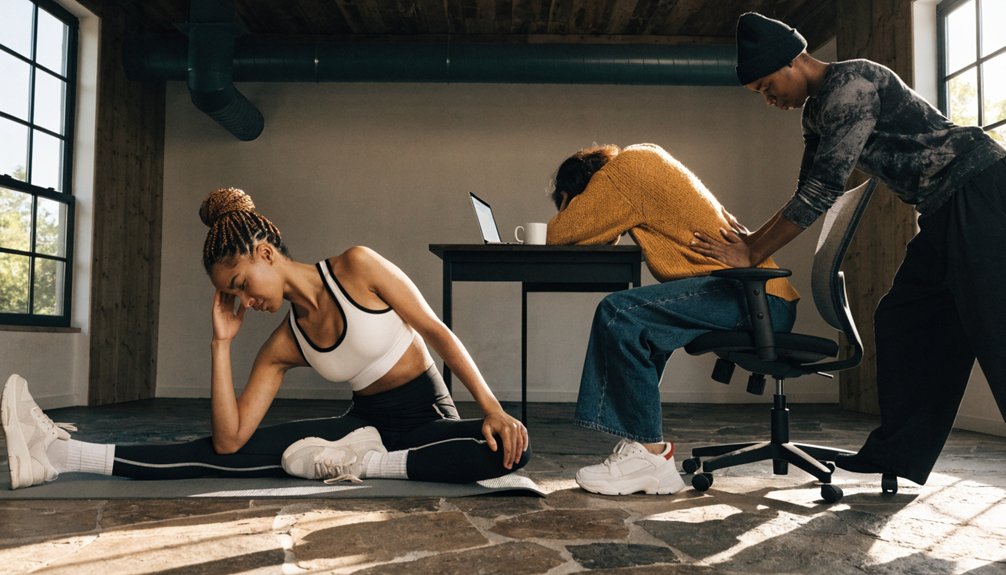
Although back pain can stem from injury or underlying disease, everyday habits are a common and often overlooked cause. Your posture habits affect spinal loading throughout the day; prolonged sitting, slouching, and repetitive bending can strain muscles, discs, and supporting ligaments.
Stress factors also matter. When you’re under chronic stress, muscle tension often increases, especially in the neck and lower back. Excess body weight raises mechanical demand, so weight management can reduce cumulative stress on spinal structures. Footwear choices influence alignment from the ground up; unsupportive or worn shoes may alter gait and irritate the back. Even sleep positions contribute, since poor overnight alignment can sustain tissue strain. Targeted lifestyle adjustments can lower these exposures and help you identify which daily behaviors are provoking persistent symptoms over time. Maintaining a healthy weight through balanced nutrition and regular exercise reduces strain on the spine and helps prevent chronic back pain.
Back Pain Treatment for Active Bodies
If you’re physically active, your back pain treatment should account for training load, tissue recovery, and movement mechanics. You’ll benefit from evidence-based exercise recovery strategies, including adequate rest, progressive loading, and symptom-guided activity modification. Injury prevention techniques such as strength balance, core stabilization, and proper form can reduce recurrence and support long-term function. Incorporating tailored exercises and stretching that address lower back pain can further enhance flexibility, reduce muscle tightness, and support long-term back health.
Exercise Recovery Strategies
When back pain follows training, recovery strategies should reduce tissue irritation without eliminating movement, because prolonged rest can delay return to activity.
You’ll usually recover better with measured, symptom-guided loading and basic supportive habits, such as:
- Short walks or easy cycling to maintain circulation and spinal mobility
- recovery nutrition with adequate protein, fluids, and carbohydrates to support repair
- foam rolling for surrounding hips and thighs, avoiding direct pressure on painful lumbar tissues
- Sleep regularity and brief heat application when stiffness limits comfortable motion
Monitor whether symptoms centralize, ease within twenty-four hours, and don’t escalate during normal tasks. If pain becomes constant, radiates below the knee, or disrupts strength, seek clinical assessment. Early, controlled recovery helps you restore training tolerance while minimizing unnecessary deconditioning and preserving movement confidence overall.
Injury Prevention Techniques
Recovery habits help symptoms settle, but preventing repeat flare-ups depends on how you load the spine during training and daily activity. Build posture awareness so you can avoid sustained flexion, abrupt rotation, and excessive compression under fatigue.
Prioritize core stability with progressive bracing, hip control, and balanced strengthening, because trunk endurance reduces compensatory stress. Use stretching routines selectively for tight hips, hamstrings, and thoracic tissues, then reinforce gains through daily mobility drills. Refine lifting techniques: hinge at the hips, keep loads close, and match effort to capacity. Review footwear choices, since unstable or worn shoes can alter mechanics upstream. Support tissue recovery with relaxation strategies that lower guarding and improve breathing patterns. Finally, optimize sleep positions to maintain neutral alignment and reduce overnight irritation, especially during symptom-sensitive periods.
Back Pain Treatment for Desk Jobs

If you work at a desk, your treatment plan should address both posture-related load and prolonged sitting time. You’ll likely benefit from an ergonomic setup that supports neutral spinal alignment, including appropriate monitor height, chair support, and keyboard position. You should also use scheduled movement breaks, as brief, regular standing or walking periods can reduce stiffness and cumulative back strain. Frequent movement throughout the day supports spinal health and helps counteract the discomfort associated with prolonged sitting.
Ergonomic Desk Setup
A well-designed workstation can reduce mechanical stress on your spine, which matters because prolonged sitting, poor monitor height, and unsupported arm or lumbar positions often increase back pain in desk-based work. Optimize your setup systematically:
- Set desk height so elbows stay near 90 degrees and shoulders remain relaxed.
- Use chair support to maintain lumbar contour, neutral pelvis, and consistent posture alignment.
- Adjust monitor placement at eye level, with keyboard angle flat or slightly negative.
- Guarantee foot positioning is stable, improve workspace organization, cable management, lighting conditions, and noise control.
These adjustments help distribute load more evenly across spinal structures and reduce sustained muscle activation. If your symptoms persist despite ergonomic correction, you should consider a clinician’s assessment to identify contributing factors such as nerve irritation or underlying joint pathology promptly.
Movement Break Strategies
Because static sitting increases disc pressure and sustains low-level muscle loading, scheduled movement breaks are one of the most effective ways to reduce pain during desk work. Aim to stand or walk every 30 to 60 minutes, even for one to two minutes, to restore circulation and reduce spinal stiffness.
You’ll get better results by pairing posture reminders with brief desk stretches, micro exercises, and mindful movements. Use standing desks intermittently rather than continuously, since prolonged standing can also aggravate symptoms. Dynamic sitting, such as subtle pelvic tilts or weight shifts, helps vary tissue loading between breaks. When possible, replace seated discussions with walking meetings to increase step count and lumbar mobility. Consistency matters more than intensity; brief, frequent changes in position are usually more protective than occasional longer sessions.
How Stretching and Strength Work Together
While stretching can reduce stiffness and improve joint mobility, strength training helps your spine stay supported during daily movement. Together, they improve muscle balance, core stability, and postural alignment, which can lower mechanical stress on spinal tissues. You’ll get better results when dynamic stretching prepares muscles for loading, and strength conditioning reinforces control through full ranges. Consistent, targeted exercise and physical therapy can improve spine health and reduce the risk of future back pain episodes.
- Use dynamic stretching before activity to increase circulation and improve movement quality.
- Add mobility exercises to restore joint motion without forcing painful ranges.
- Include flexibility training after exercise for tension relief and tissue tolerance.
- Build core stability with strength conditioning to support muscle balance and spinal control.
This combined approach is evidence-based: flexibility without strength may leave joints under-supported, while strength without mobility can restrict efficient movement and increase compensatory strain patterns over time.
Daily Habits That Keep Back Pain Down
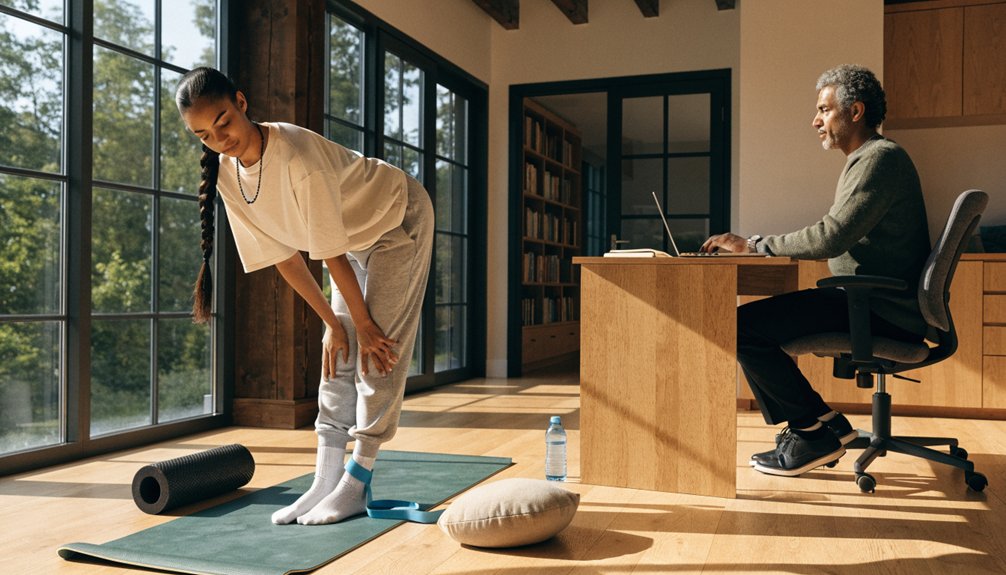
Although exercise matters, your daily movement patterns often determine whether back pain stays controlled or keeps recurring. Build posture awareness into routine tasks: keep screens at eye level, hinge at your hips when lifting, and avoid holding any one position too long. Brief position changes reduce spinal loading and muscle fatigue. Support your back with consistent daily mobility. Stand up every 30 to 60 minutes, walk during calls, and alternate sitting with standing if possible. When you sit, keep your feet grounded and your lower back supported. Sleep matters too; use a mattress and pillow that maintain neutral alignment. Small habits also count: carry loads close to your body, distribute weight evenly, and brace your abdomen gently before bending. These behaviors lower cumulative strain and help symptoms stay manageable over time. Healthy back-supportive footwear with low heels can also reduce strain on your spine during daily activities.
When Back Pain Treatment Needs a Specialist
When should you see a specialist for back pain? If symptoms persist beyond several weeks, worsen, or limit function, you may need a specialist referral. Chronic pain, neurologic changes, trauma, fever, or unexplained weight loss warrant prompt evaluation. A specialist can determine whether diagnostic imaging is appropriate and whether targeted physical therapy or pain management is indicated. Early assessment of persistent back pain can help prevent long-term complications and support better recovery.
- Pain radiates below your knee or causes weakness or numbness.
- Night pain, bowel or bladder changes, or fever appear.
- Standard exercise, rest, and medication haven’t improved symptoms.
- Your job, sport, or daily activity is considerably restricted.
You should also expect patient education about prognosis, ergonomics, and safe activity. Depending on findings, clinicians may discuss holistic approaches or alternative therapies as adjuncts, not replacements, for evidence-based treatment to improve outcomes.
How to Build a Long-Term Back Care Plan
Because back pain often recurs, a long-term care plan should focus on reducing flare-ups, preserving function, and supporting consistent activity rather than relying on short-term symptom relief alone. You should identify triggers, track symptoms, and set measurable goals for strength, mobility, sleep, and work tolerance. Incorporating posture training exercises into your routine can promote proper alignment and help prevent chronic strain on your back over time. Your plan should combine exercise therapy, pacing, and ergonomic adjustments with lifestyle modifications that address weight, smoking, stress, and physical inactivity. You’ll benefit most from progressive core and hip strengthening, regular walking, and flexibility work matched to your tolerance. Schedule follow-ups to reassess function, adherence, and red flags. Use medications sparingly when appropriate, and prioritize self-management skills. Holistic approaches, including mindfulness or cognitive behavioral strategies, can reduce pain-related fear and improve coping. Consistency, not intensity, usually determines long-term results for most people.
Frequently Asked Questions
Can Weather Changes Make Back Pain Feel Worse?
Yes, weather changes can make your back pain feel worse; weather patterns and seasonal fluctuations may influence pain sensitivity, muscle tension, and joint stiffness. Evidence is mixed, but you may notice symptom changes with temperature or barometric shifts.
Does Mattress Firmness Affect Back Pain Recovery?
Yes, mattress firmness can affect your back pain recovery; medium-firm options often help most. Your ideal choice also depends on mattress types and sleep position, because proper spinal alignment and pressure distribution can reduce pain and improve healing.
Can Dehydration Contribute to Recurring Back Pain?
Yes—dehydration can quietly sabotage your spine like a thief overnight. Reduced hydration impact may impair disc cushioning and increase muscle tension, making recurrent back pain more likely. You’ll lower risk by maintaining consistent fluid intake daily.
Is Back Pain Linked to Stress or Anxiety?
Yes, your back pain can be linked to stress or anxiety; both increase muscle tension, pain sensitivity, and poor sleep. Evidence supports stress management and anxiety relief strategies, because they can reduce symptom intensity and recurrence.
Do Supportive Shoes Help Reduce Lower Back Pain?
Yes, supportive shoes can reduce lower back pain, especially if you’ve got poor biomechanics. Choosing appropriate shoe types with adequate arch support may improve alignment, lessen impact forces, and modestly decrease pain, though individual response varies.