
About 80% of adults experience back pain at some point, and poor posture is a common, correctable factor. If your discomfort worsens after sitting, standing, or lifting, your alignment may be placing excess strain on muscles and joints. You can often reduce symptoms with specific stretches, strengthening work, and ergonomic changes. The key is knowing which patterns are driving your pain—and which adjustments will actually help.
Key Takeaways
- Improve sitting and standing alignment to reduce spinal stress, especially avoiding slouching and forward head posture.
- Identify posture-related pain by noticing symptoms that worsen with prolonged sitting, screen use, or standing and ease with movement.
- Use gentle stretches like chest openers, hip flexor stretches, Child’s Pose, and Cat-Cow to relieve tightness and stiffness.
- Strengthen postural muscles with scapular retractions, resistance band rows, bridges, bird-dogs, and side planks.
- Prevent recurrence with ergonomic adjustments, regular movement breaks, proper lifting mechanics, and supportive footwear.
How Poor Posture Leads to Back Pain

Although poor posture may seem minor, it can place continuous mechanical stress on the spine, muscles, and supporting ligaments. When you slouch, round your shoulders, or jut your head forward, spinal alignment shifts away from neutral. That shift increases compressive loading on discs, strains paraspinal muscles, and overstretches ligaments designed for stabilization. Over time, your body compensates through altered movement patterns, muscular imbalance, and reduced joint efficiency. Because poor posture often coexists with a sedentary lifestyle, incorporating regular exercise helps build strength and flexibility that protect the spine from posture-related back pain.
You can reduce this mechanical burden through posture awareness and ergonomic adjustments. Position your monitor at eye level, keep feet flat, support your lumbar curve, and align ears over shoulders. These corrections distribute forces more evenly across tissues, decrease unnecessary muscle activation, and help restore efficient biomechanics. Consistent alignment limits cumulative stress that commonly contributes to persistent back pain over time.
Signs Your Back Pain Is Posture-Related
How can you tell whether posture is a primary driver of your back pain? You’ll usually notice a consistent pattern: symptoms increase during sitting, screen use, driving, or prolonged standing, then ease when you change position. A basic posture assessment often reveals forward head carriage, rounded shoulders, or excessive lumbar arching. Regular movement and a back‑friendly workspace can significantly reduce posture-related discomfort over the course of the workday.
- Your pain builds gradually, not suddenly, during routine tasks.
- You feel stiffness after desk work, then partial relief with movement.
- One-sided muscle fatigue appears in your neck, shoulders, or lower back.
- Ergonomic adjustments, such as monitor height or chair support, reduce symptoms measurably.
If these findings describe your experience, posture is likely contributing. Persistent pain, radiating symptoms, numbness, or weakness suggest additional causes and justify professional evaluation by a clinician or physical therapist.
Stretches That Relieve Posture-Related Back Pain
When posture is a main contributor to your back pain, targeted stretching can reduce the muscle tension and joint stiffness that build during sitting, screen use, and prolonged standing. Focus on the chest, hip flexors, hamstrings, and thoracic spine, since restriction in these areas commonly alters alignment and increases lumbar strain. Begin with doorway chest stretches, kneeling hip flexor stretches, and gentle hamstring lengthening for 20 to 30 seconds each, repeating two to four times. Add thoracic extension over a rolled towel or foam rolling across the upper back to improve mobility. Controlled yoga poses, including Child’s Pose and Cat-Cow, can decrease stiffness while promoting spinal movement. You should stretch to mild tension, not pain, and breathe steadily. If symptoms radiate, intensify, or persist, you should stop and seek evaluation promptly. Consistently pairing these stretches with proper posture during your daily activities helps maintain spine support and improves long-term back comfort.
Strength Exercises to Improve Poor Posture
Because poor posture often reflects reduced muscular support rather than flexibility alone, strengthening the muscles that stabilize your shoulder blades, trunk, and hips can lessen strain on the spine and help you maintain better alignment throughout the day. Incorporating these exercises into a regular routine supports long-term back health and can help prevent progression from occasional discomfort to chronic pain.
- Perform scapular retractions to target the upper back; squeeze shoulder blades for five seconds, then release.
- Use rows with resistance bands to reinforce postural endurance and improve shoulder positioning.
- Add bridges and bird-dogs for core strengthening; these exercises activate glutes and deep trunk stabilizers.
- Practice side planks to increase lateral trunk control and reduce compensatory spinal motion.
Complete two to three sets of eight to twelve repetitions with controlled tempo. Stop if pain sharpens, radiates, or persists after exercise. Reassess technique regularly for accuracy.
Daily Habits That Prevent Back Pain
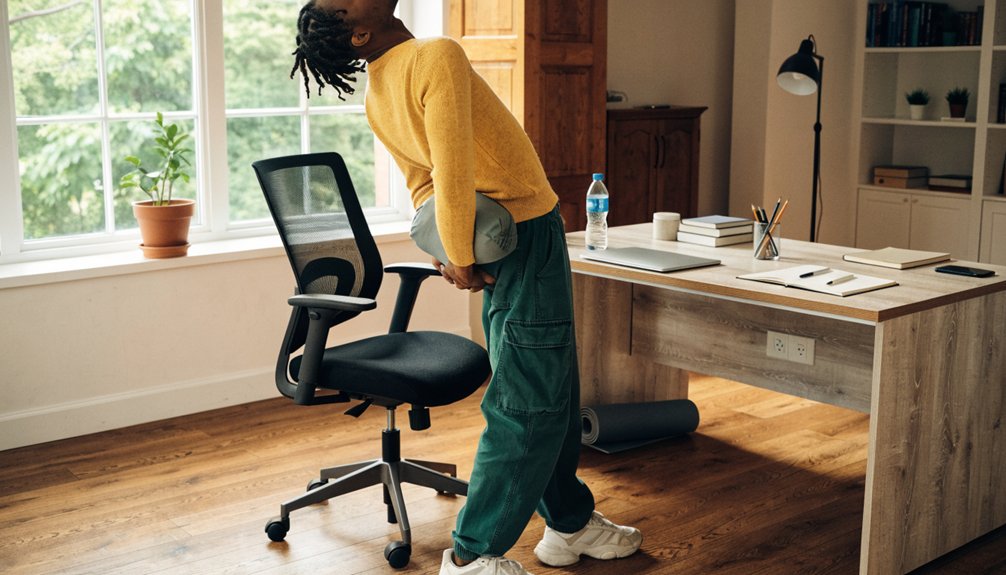
Strength work improves support, but your daily routines determine how consistently that support protects your spine. Set an ergonomic workspace: align screen height at eye level, keep elbows near 90 degrees, and practice mindful sitting with brief standing breaks every 30 minutes. Incorporating proper lifting techniques into your daily routine further reduces the risk of back strain and long-term injury.
| Habit | Effect |
|---|---|
| Proper lifting | Prevents sudden strain and fear |
| Supportive footwear | Reduces fatigue and instability |
| Screen height | Limits neck tension and headaches |
| Mindful sitting | Protects discs during long tasks |
When you bend, hinge at your hips, brace your abdomen, and keep loads close. Choose supportive footwear with stable soles if you stand often. These habits seem small, yet they spare you the draining ache that can follow one careless day. Repeat them until they become automatic.
Frequently Asked Questions
Can Poor Posture Cause Permanent Spinal Damage if Untreated?
Yes, if you don’t correct poor posture, you can develop long term effects affecting spinal health, including disc degeneration, chronic pain, and structural changes. You should seek evaluation early, because prolonged mechanical stress may become irreversible.
When Should Posture-Related Back Pain Be Evaluated by a Doctor?
You should seek medical evaluation if your posture-related back pain persists beyond two weeks, worsens, or limits function. Don’t ignore early symptoms like numbness, weakness, radiating pain, fever, trauma history, or bowel/bladder changes.
Are Ergonomic Chairs Necessary to Reduce Posture-Related Back Pain?
No—ergonomic chairs aren’t necessary; studies suggest workplace adjustments reduce musculoskeletal symptoms by about 17%. You can use ergonomic alternatives if essential chair features support neutral spine alignment, adjustable height, lumbar support, and proper hip-knee positioning.
Can Sleeping Positions Worsen Back Pain Caused by Poor Posture?
Yes, your sleeping position can worsen posture-related back pain; side or supine alignment is preferable. You should assess mattress types and consider sleeping aids, because inadequate spinal support during sleep can perpetuate muscular strain and discomfort.
How Long Does It Take to Correct Posture-Related Back Pain?
Picture a dial slowly resetting: you’ll often notice posture-related back pain improving within 2–6 weeks, but full correction may take 8–12 weeks or longer, depending on consistency with posture exercises, lifestyle changes, and symptom severity.