
Back pain can feel deceptively simple, yet its causes and treatments are often complex. If you want lasting relief, you’ll need more than short-term rest or pain pills. Effective care depends on identifying the source, judging severity, and matching treatment to your symptoms and function. Options range from home strategies and exercise to physical therapy, medication, and procedures. The key question isn’t just what helps now—it’s what will keep your pain from returning.
Key Takeaways
- Stay active within pain tolerance, use heat or ice, and consider safe OTC pain relief for short-term symptom control.
- Physical therapy can reduce recurring pain by improving posture, mobility, strength, and daily movement patterns.
- Gentle stretching, core strengthening, and low-impact exercise support spinal stability and help prevent future flare-ups.
- Seek medical evaluation for trauma, worsening pain, numbness, weakness, fever, weight loss, or bowel and bladder changes.
- If conservative care fails, options like injections, nerve procedures, or surgery may help selected patients with structural or nerve-related problems.
What Causes Back Pain in the First Place?

Although back pain can start suddenly after an injury, it more often develops from a combination of mechanical strain, age-related disc and joint changes, poor movement patterns, and prolonged sitting or repetitive loading. Your symptoms may arise when tissues exceed their tolerance, leading to muscle strain, ligament irritation, or sensitized spinal joints. Deconditioned trunk and hip muscles can reduce load sharing, while limited mobility in the hips or thoracic spine may increase stress on lumbar segments. You may also develop pain when spinal alignment is compromised during lifting, bending, or sustained postures. Intervertebral discs gradually lose hydration with age, which can alter force distribution and stiffness. In many cases, back pain reflects cumulative biomechanical stress rather than a single damaged structure, especially when recovery, sleep, and activity variation are insufficient. Over time, consistently poor posture can further increase stress on spinal discs and supporting muscles, raising the risk of recurring back pain.
When Does Back Pain Need Medical Care?
Most back pain improves with conservative care, but certain symptoms mean you shouldn’t wait. You should seek medical evaluation if your pain follows trauma, persists or worsens, radiates with numbness or weakness, or occurs with fever, unexplained weight loss, or bowel or bladder changes. Knowing these warning signs helps you decide when seeing a doctor is appropriate and when urgent care may be necessary. Early medical evaluation can prevent long-term complications associated with back pain.
Warning Signs To Watch
When should back pain prompt medical evaluation? You should monitor for red flag symptoms that suggest infection, fracture, nerve compression, or malignancy. These include unexplained fever, recent significant trauma, cancer history, immunosuppression, intravenous drug use, or pain that’s constant, severe, and unrelieved by rest. New bowel or bladder dysfunction, saddle numbness, or progressive leg weakness may indicate cauda equina syndrome or serious neurologic compromise.
You should also note chronic pain indicators. Pain lasting beyond several weeks, recurring nocturnal pain, unexplained weight loss, or worsening stiffness can signal an underlying inflammatory or structural condition. Numbness, tingling, radiating pain below the knee, or weakness affecting walking may reflect nerve root involvement. If your symptoms escalate quickly, tracking timing, triggers, and associated changes can clarify severity and pattern.
When To See A Doctor
Generally, back pain needs medical care if it’s severe, persists beyond 2 to 4 weeks despite self-care, or interferes with sleep, work, walking, or routine activities. You should also seek evaluation if pain follows trauma, rapidly worsens, or recurs frequently, because these patterns can indicate structural injury or chronic conditions.
A clinician can assess whether your symptoms suggest nerve compression, fracture, infection, inflammatory disease, or another underlying disorder. You may need prompt attention if you develop weakness, numbness, unexplained weight loss, fever, or bowel or bladder changes. Depending on your history and examination, your doctor may recommend diagnostic tests such as imaging or blood work. Early assessment helps guide targeted treatment, reduce disability, and prevent prolonged pain from becoming harder to manage over time.
Home Back Pain Treatment That Eases Flare-Ups

Although a back pain flare-up can feel urgent, home treatment is often appropriate for short-term symptom control if you don’t have red-flag signs such as severe weakness, loss of bowel or bladder control, fever, or major trauma. Keep moving within tolerance, since prolonged bed rest can worsen stiffness and delay recovery. Use hot compresses for 15 to 20 minutes to relax muscles and reduce pain sensitivity. If pain began after a strain, ice may help during the first 24 to 48 hours. Try gentle stretching only in a comfortable range, and stop if symptoms radiate or intensify. You can also consider over-the-counter NSAIDs or acetaminophen if they’re safe for you. Supportive sleep positions, paced activity, and avoiding heavy lifting often help flare-ups settle over several days. For more persistent issues, integrating tailored exercises and simple stretches into your routine can improve flexibility and support long-term back health.
Physical Therapy for Lasting Back Pain Relief
Because persistent or recurrent back pain often has mechanical and movement-related contributors, physical therapy can play a central role in longer-term relief and relapse prevention. Your therapist evaluates posture, joint mobility, tissue sensitivity, and movement patterns to identify drivers of pain, stiffness, or repeated flare-ups. Physical therapy is a globally recognized profession supported by organizations such as World Physiotherapy, which promotes high standards of care and evidence-based practice.
- manual therapy may reduce pain and improve short-term mobility when clinically indicated.
- stretching techniques can address muscle tightness and restricted soft tissues contributing to altered mechanics.
- education helps you modify lifting, sitting, and daily habits that overload vulnerable structures.
Treatment is individualized, progressive, and guided by response rather than a fixed protocol. Evidence suggests that combining hands-on care, symptom monitoring, and movement retraining can improve function and reduce recurrence. If your symptoms persist, physical therapy offers a structured, noninvasive path toward durable relief over time.
Best Exercises for Back Pain Treatment
Exercise builds on the gains of physical therapy by helping you restore mobility, improve trunk and hip strength, and increase tolerance for daily activity without provoking symptoms. Start with low-load stretching routines for the hamstrings, hip flexors, and thoracic spine to reduce stiffness and improve movement quality. Incorporating posture training exercises can help maintain proper alignment and reduce strain on your spine during daily activities.
Next, add core strengthening exercises that train endurance rather than maximal force. Modified planks, bird-dog, dead bug, and glute bridges can improve spinal support while limiting excessive strain. If flexion or extension worsens pain, you should use symptom-guided modifications and keep movements in a comfortable range.
Walking, swimming, and cycling are also effective for graded conditioning. Aim for consistency, gradual progression, and proper form. If pain radiates, intensifies, or persists after exercise, you should stop and consult your clinician.
Medications That Can Help Back Pain
Medication can play a supporting role in back pain treatment when symptoms limit sleep, mobility, or participation in rehabilitation. Used appropriately, it can reduce pain enough for you to stay active and continue recovery.
- Over the counter medications like acetaminophen or NSAIDs may ease mild to moderate pain and inflammation.
- Topical analgesics can target localized discomfort with fewer systemic effects, which may help if oral drugs aren’t ideal.
- Muscle relaxants or short-term prescription painkillers may be considered when pain is more severe or spasm-driven.
Because both OTC and prescription options have potential side effects, especially with long-term use, it’s important to have regular evaluations of how well your medication is working and whether it’s still needed. You shouldn’t rely on medication alone. The best results usually come when drugs are paired with exercise, posture changes, and guided physical therapy. Because risks vary by drug class, you should review dosing, interactions, and duration with your clinician carefully.
Advanced Back Pain Treatment Options Explained
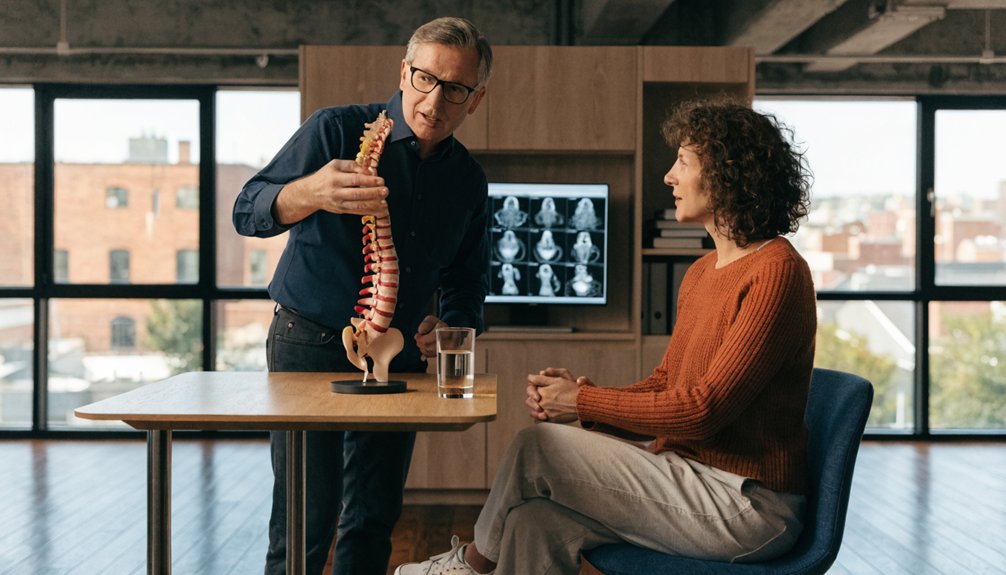
When conservative care doesn’t provide enough relief, advanced back pain treatments may be considered to target specific pain generators and improve function. If your symptoms persist, your clinician may recommend image-guided epidural steroid injections, facet joint blocks, or radiofrequency ablation to reduce inflammation and interrupt pain signaling. For nerve compression, minimally invasive decompression procedures may be appropriate, while structural instability can sometimes require surgical stabilization. In more severe or persistent cases, surgical options such as spinal fusion surgery may be considered to stabilise the spine, relieve nerve pressure, and improve mobility.
You may also benefit from nonpharmacologic modalities used in coordinated care plans. Chiropractic care can help selected patients with mechanical low back pain through spinal manipulation, though it isn’t appropriate for every diagnosis. Acupuncture therapy may reduce pain intensity and improve short-term function, particularly in chronic cases. Treatment selection should follow a clear diagnosis, examination findings, imaging when indicated, and your response to prior therapies over time.
Lifestyle Changes That Prevent Back Pain
Adopt daily habits that reduce mechanical strain on your spine, because back pain prevention usually depends more on consistent lifestyle choices than on any single treatment. You can lower recurrence risk by improving movement patterns, conditioning trunk muscles, and limiting prolonged static postures throughout the day. Use ergonomic adjustments at your workstation so your monitor, chair, and keyboard support neutral spinal alignment. Incorporating ergonomic furniture and proper posture into your daily routine helps maintain the spine’s natural curve and reduce office-related back pain. Stay physically active with walking, mobility work, and progressive strengthening, which helps maintain disc nutrition and muscular endurance. Practice stress management, since chronic tension and poor sleep can increase pain sensitivity and paraspinal muscle guarding.
You should also lift with hip and knee flexion, keep loads close to your body, maintain a healthy weight, and alternate sitting with standing to reduce cumulative spinal stress daily.
How to Choose the Right Back Pain Treatment?
How do you choose the most appropriate back pain treatment? Start with an accurate diagnosis, because effective care depends on the pain source, duration, severity, and associated neurologic symptoms. You should seek urgent evaluation for weakness, numbness, bowel or bladder changes, fever, trauma, or unexplained weight loss. For most nonspecific back pain, evidence supports beginning with conservative treatment modalities, including activity modification, physical therapy, and nonopioid medications when appropriate. If pain persists, your clinician may consider imaging, targeted injections, or other interventions based on functional limitation and examination findings. Treatment selection should also reflect patient preferences, work demands, comorbidities, and tolerance for risk. You’ll usually benefit most from a stepwise plan that combines symptom control, restored mobility, and strategies that reduce recurrence over time. Incorporating lifestyle changes such as weight management, regular exercise, and proper body mechanics helps prevent future episodes and supports long‑term back health.
Frequently Asked Questions
Can Weather Changes Make Back Pain Worse?
Yes, weather changes can worsen your back pain; temperature fluctuations may tighten tissues, and humidity levels may alter pressure sensitivity. You might notice more stiffness, more aching, more discomfort, though evidence remains mixed and individualized overall.
Is Back Pain Linked to Stress or Anxiety?
Yes, your back pain can be linked to stress or anxiety; both increase muscle tension and pain sensitivity. Clinical evidence supports stress management and anxiety relief strategies, since reducing psychological distress often improves your symptoms and function.
Can Poor Sleep Contribute to Chronic Back Pain?
Like a frayed circuit, yes—you’ll often find poor sleep quality can worsen chronic back pain by increasing inflammation, pain sensitivity, and muscle tension. Improving sleep quality is consequently a clinically supported part of effective pain management.
Are Ergonomic Mattresses Helpful for Back Pain?
Yes, you may benefit from an ergonomic mattress if mattress firmness matches your body and sleep posture. Evidence suggests medium-firm designs often reduce back pain, but individual response varies, so symptom-guided selection and trial periods matter.
Does Dehydration Affect Back Pain Symptoms?
Yes—when you’re dried like a sunbaked sponge, dehydration can intensify back pain. Reduced hydration levels may decrease disc cushioning and muscle function, affecting spinal health. You’ll often notice more stiffness, cramping, and pain sensitivity.