
Like a warning light on a dashboard, lower back pain tells you something needs attention, but not always the same fix. To find the right treatment, you need to match the cause, severity, and duration of your symptoms with the least invasive option that’s likely to help. Many cases improve with simple care, while others need prompt medical evaluation. The key difference often lies in a few specific signs.
Key Takeaways
- Start with a medical evaluation to identify the cause of pain and check for red flags like weakness, numbness, fever, or bowel changes.
- Most mild lower back pain improves with activity modification, walking, heat, and safe over-the-counter pain relievers.
- Physical therapy is often the best next step for ongoing pain, improving strength, mobility, posture, and body mechanics.
- Imaging, injections, or surgery are usually reserved for suspected nerve compression, persistent symptoms, or structural problems.
- Prevent recurrence with regular core strengthening, ergonomic changes, healthy weight, and early action if symptoms return.
What Causes Lower Back Pain?
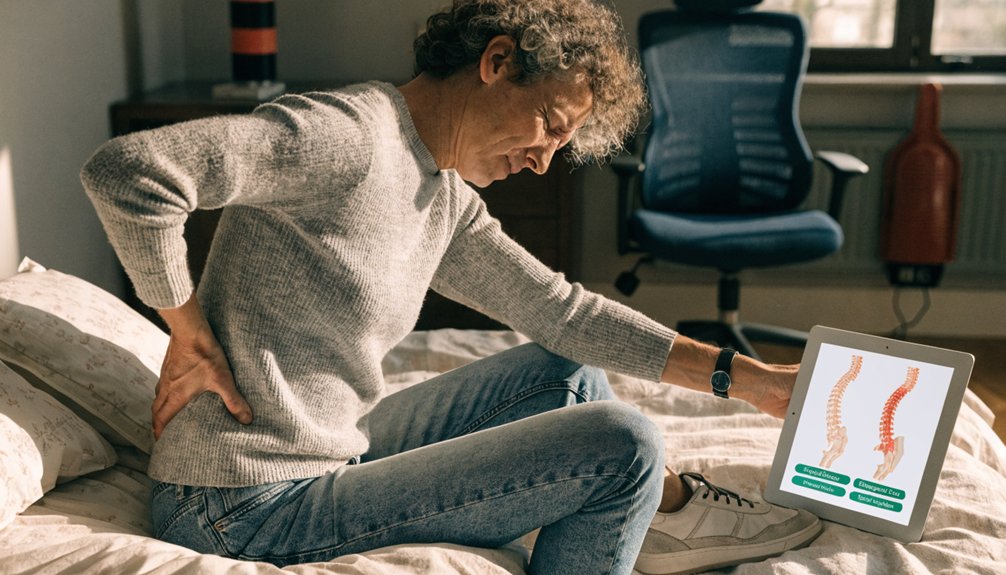
Although lower back pain often feels like a single problem, it can arise from several distinct structures and conditions, including strained muscles or ligaments, degenerative disc changes, facet or sacroiliac joint dysfunction, spinal stenosis, nerve root compression such as sciatica, and less commonly fractures, infection, inflammatory disease, or cancer. In practice, your symptoms reflect the tissue involved and the mechanical stresses placed on it. A muscle strain usually causes localized pain after lifting, twisting, or overuse. Degenerating discs and arthritic joints can produce stiffness and pain with extension or prolonged sitting. If a nerve root is compressed, you may feel radiating pain, numbness, or weakness down a leg. Abnormal spinal alignment, reduced core support, repetitive loading, and age-related changes can all increase stress on lumbar structures over time. Over months and years, poor posture and repetitive strain can accelerate degenerative disc changes and increase the likelihood that back pain will recur.
When Can You Treat Lower Back Pain at Home?
You can often treat lower back pain at home if your symptoms are mild, improve with rest or activity modification, and aren’t limiting basic function. Evidence supports conservative care for short-term pain that isn’t accompanied by weakness, numbness, fever, or pain after significant trauma. If you develop these red flags, or if pain persists or worsens, you should seek medical evaluation promptly. In these cases, a clinician may recommend physical therapy or other non-surgical treatments to strengthen your back and support long-term recovery.
Mild Symptoms At Home
Many episodes of lower back pain can be managed at home when symptoms are mild, clearly tied to a strain or overuse, and not accompanied by warning signs such as significant weakness, numbness, fever, or loss of bladder or bowel control. You’ll usually improve with brief activity modification, relative rest, and simple home remedies.
- Use heat after the first day to reduce muscle tension.
- Keep walking; prolonged bed rest can delay recovery.
- Try over-the-counter pain relief if it’s safe for you.
- Add gentle stretching only if movement doesn’t worsen pain.
- Make lifestyle adjustments, including posture and lifting mechanics.
Most uncomplicated pain improves within days to a few weeks. You should pace activity, avoid heavy lifting temporarily, and resume normal movement as tolerated to support function and prevent stiffness.
Red Flags For Care
When should lower back pain be treated at home, and when is prompt medical evaluation the safer choice? You can usually manage uncomplicated soreness at home if it’s mild, improves within days, and isn’t accompanied by warning signs. Supportive care includes staying active, using heat, and taking appropriate over-the-counter medication.
Seek urgent care if you develop severe or worsening pain after trauma, fever, unexplained weight loss, cancer history, or immune suppression. Prompt evaluation is also warranted if pain radiates below the knee with progressive weakness, numbness, saddle anesthesia, or bowel or bladder changes, since these can indicate nerve compression. You shouldn’t delay care for constant night pain, spinal tenderness, or symptoms suggesting infection or fracture. If pain persists beyond several weeks, schedule a medical assessment promptly.
Which Lower Back Pain Symptoms Need a Doctor?
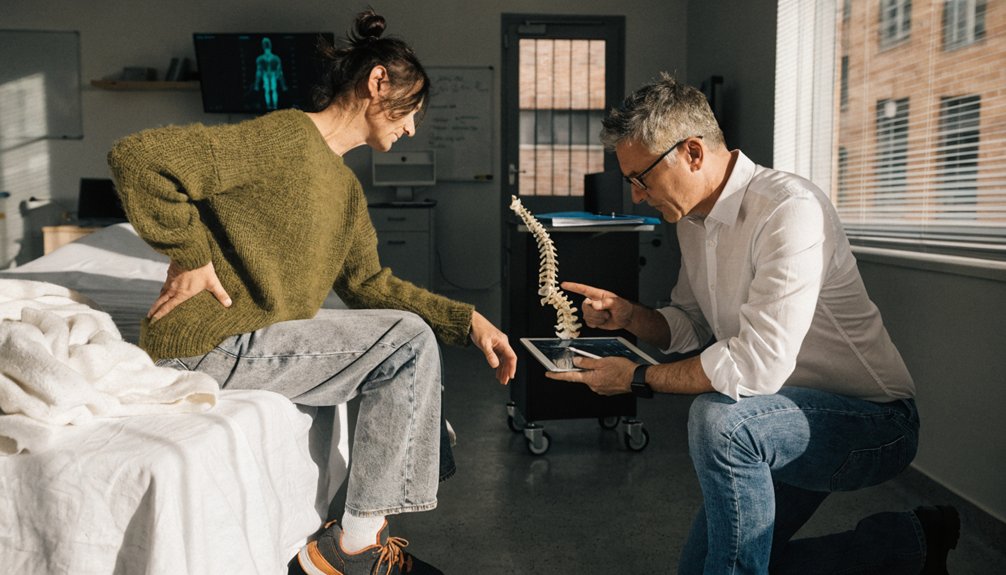
How can you tell whether lower back pain needs medical evaluation? You shouldn’t ignore chronic pain lasting weeks, especially if function declines. You also need prompt care when pain has sudden onset after lifting, twisting, or a fall, because structural injury is possible. Neurologic changes matter too.
- A new numbness sensation in your back, buttock, groin, or leg
- Leg weakness that affects walking, standing, or climbing stairs
- Bowel issues, including incontinence or trouble controlling movements
- Fever symptoms, chills, or unexplained malaise with back pain
- Pain that wakes you nightly or keeps worsening despite rest
These symptoms can indicate nerve compression, infection, fracture, or other significant pathology. If they’re present, you should contact a clinician promptly rather than self-managing. Early assessment can reduce complications and speed treatment. Even when symptoms seem mild, persistent back pain lasting more than a few days is a key sign that medical evaluation is warranted to prevent long-term complications.
How Doctors Diagnose Lower Back Pain
To diagnose lower back pain, your doctor will first review your medical history, including symptom pattern, prior injuries, activity limits, and any red-flag signs. You’ll then have a focused physical exam that may assess posture, range of motion, strength, reflexes, sensation, and nerve tension. If your findings suggest a specific cause, imaging or lab tests may be used to confirm the diagnosis and rule out serious conditions. Because low back pain can arise from mechanical, non-mechanical, or referred sources, your doctor will also consider whether your symptoms point to neurological issues or more common muscle and joint causes.
Medical History Review
Before any imaging or physical exam findings are considered, your doctor will usually start with a focused medical history, because it often provides the clearest clues about the cause of lower back pain. You’ll be asked when pain began, whether it followed injury, and how it affects sleep, work, and movement. Careful symptom tracking helps identify patterns, triggers, and warning signs that may indicate nerve involvement, infection, fracture, or inflammatory disease. Your doctor will also review prior episodes, medications, medical conditions, and response to past treatment options.
- Pain onset and duration
- Location and radiation
- Numbness, weakness, or bladder changes
- Fever, weight loss, or trauma history
- Previous therapies and medication use
These answers guide diagnosis efficiently and help determine whether urgent evaluation is needed or conservative care remains appropriate.
Physical Exam Methods
Once your medical history has narrowed the possibilities, your doctor will perform a targeted physical exam to identify mechanical, neurologic, or systemic causes of lower back pain. You’ll usually be observed standing, walking, bending, and changing positions to reveal guarded movement, asymmetry, or instability.
Next, your clinician uses palpation techniques to check for tenderness, muscle spasm, step-offs, or pain over the spine, sacroiliac joints, and surrounding soft tissues. A focused range assessment measures flexion, extension, rotation, and side bending, noting whether pain is localized or radiates. Neurologic testing then evaluates strength, sensation, and reflexes in your legs. Specific maneuvers, such as the straight leg raise, can indicate nerve root irritation. Together, these findings help distinguish strain, disc-related pain, spinal stenosis, or inflammatory patterns before treatment decisions are made.
Imaging And Lab Tests
Although imaging can clarify certain causes of lower back pain, it isn’t routinely needed in the initial evaluation unless your history or physical exam suggests red flags such as trauma, cancer, infection, fracture, or progressive neurologic deficit.
- MRI benefits include detecting nerve compression and infection.
- X ray limitations mean poor soft-tissue detail.
- Imaging techniques should match your pain assessment findings.
- Lab results can identify inflammation or infection.
- Test accuracy improves treatment planning and avoids unnecessary diagnostic procedures.
If needed, your doctor may order MRI for discs, nerves, or tumors, while X-rays mainly assess alignment or fractures. Blood tests, including CBC, ESR, or CRP, are useful when infection, inflammatory disease, or malignancy is suspected. These diagnostic procedures guide targeted treatment planning and reduce unnecessary interventions effectively.
Best Home Treatments for Lower Back Pain
Because most episodes of lower back pain improve without invasive treatment, the most effective home strategies focus on reducing pain, maintaining function, and supporting recovery. You should stay lightly active, avoid prolonged bed rest, and modify tasks that aggravate symptoms. Heat therapy can reduce muscle spasm and improve short-term comfort, especially during the first several days. Over-the-counter NSAIDs or acetaminophen may help, if they’re safe for you. Incorporating gentle, regular movement that supports core strength and flexibility can also help prevent future episodes of low back pain and improve overall spinal health.
You can also use supportive sleep positioning, brief walking, and paced activity to limit stiffness. Herbal remedies such as topical capsaicin or arnica have limited but sometimes useful evidence for mild pain relief. Ice may help if pain follows a strain or feels inflamed. Seek medical evaluation promptly if you develop weakness, numbness, fever, trauma, or bowel or bladder changes.
Physical Therapy for Lower Back Pain Relief
Physical therapy can help reduce lower back pain by improving strength, mobility, and movement patterns that may be contributing to your symptoms. You may benefit from targeted exercise programs designed to stabilize the spine, increase flexibility, and restore function based on your specific limitations. In some cases, your treatment plan may also include manual therapy techniques to reduce pain and improve joint and soft tissue mobility. In addition to exercises, your physical therapist may provide education on proper body mechanics to help prevent re-injury and support long-term back health.
Targeted Exercise Programs
When lower back pain persists or keeps returning, a targeted exercise program can help reduce symptoms by improving spinal support, mobility, and movement control. Your physical therapist will tailor exercises to your diagnosis, pain triggers, and functional limits, then progress them as tolerance improves. Evidence supports combining strength training with flexibility exercises to improve trunk stability, hip motion, and lifting mechanics.
- Build core and hip endurance
- Restore safe lumbar mobility
- Correct movement patterns during daily tasks
- Reduce recurrence through graded progression
- Improve tolerance for sitting, walking, and lifting
You’ll usually begin with low-load activation drills, then advance to resistance, balance, and endurance work. Consistency matters: performing the program correctly and regularly is linked with better pain reduction, function, and confidence in movement over time.
Manual Therapy Techniques
Although exercise is central to long-term recovery, manual therapy can provide short-term lower back pain relief by decreasing pain, reducing muscle guarding, and improving joint or soft-tissue mobility. Your clinician may combine spinal mobilization with myofascial release, trigger point therapy, chiropractic adjustments, or osteopathic manipulation, depending on your exam findings.
| Technique | Potential benefit |
|---|---|
| Mobilization | Improves segmental motion |
| Myofascial release | Reduces fascial restriction |
| Trigger point therapy | Decreases referred pain |
| Chiropractic adjustments | May restore motion |
| Osteopathic manipulation | Addresses biomechanical dysfunction |
Evidence suggests these approaches work best when matched to your presentation and paired with exercise and education. You shouldn’t expect passive care alone to fix persistent pain, but it can help you move more comfortably and participate fully in rehabilitation.
Medicines for Lower Back Pain: What Helps?
Which medicines actually help lower back pain depends on the cause, how long the pain has lasted, and whether it’s mainly inflammatory, muscular, or related to nerve irritation. You’ll usually start with over the counter NSAIDs if you can take them safely, since evidence supports short-term relief. Topical analgesics may help localized pain with fewer systemic effects. If spasm is limiting movement, muscle relaxants can provide brief benefit, though sedation is common. Some prescription medications are reserved for specific patterns, such as nerve-related symptoms, and should fit an overall pain management plan. For persistent or complex lower back pain, medicines are often most effective when combined with physical therapy and other integrative approaches that address both symptoms and underlying causes.
- Start with the safest effective option
- Use NSAIDs short term when appropriate
- Consider topical analgesics for focal pain
- Reserve muscle relaxants for acute spasm
- Pair medicines with movement and alternative therapies
When Injections or Surgery Make Sense
If medicines, activity-based care, and time haven’t provided enough relief, injections or surgery may be considered for a narrower set of lower back pain problems. You’re most likely to benefit when imaging and examination point to a specific pain generator, such as nerve root compression, spinal stenosis, or significant structural instability. In some cases of chronic lower back pain related to these issues, procedures like spinal fusion or disc replacement may be recommended to stabilise the spine and improve movement. Injection benefits are usually diagnostic or short term. Epidural steroid injections may reduce leg pain from inflamed nerve roots, while facet or sacroiliac injections can help confirm the source of pain. Relief varies and isn’t guaranteed. Surgical options are generally reserved for persistent neurologic symptoms, progressive weakness, severe stenosis, or pain linked to a correctable structural problem. Procedures may improve function and leg symptoms more reliably than nonspecific low back pain alone in carefully selected patients.
How to Choose the Right Lower Back Pain Treatment
How do you choose the right treatment for lower back pain? Start by matching care to your diagnosis, symptom severity, and functional limits. You’ll need a clinical evaluation to identify red flags, nerve involvement, or mechanical strain. Evidence usually supports beginning with the least invasive effective option, then escalating only if symptoms persist or worsen. Because low back pain is a leading cause of global disability, using evidence-based, nonpharmacologic treatments can significantly improve function and quality of life.
- Confirm the cause before starting treatment
- Match treatment intensity to pain and disability
- Use physical therapy for movement-based recovery
- Consider natural remedies with documented benefit
- Evaluate holistic approaches alongside standard care
You should weigh benefits, risks, cost, and your response over time. Nonsteroidal anti-inflammatory drugs, supervised exercise, and targeted therapy often help first. If your pain includes weakness, numbness, or severe limitation, you may need specialist assessment promptly.
How to Prevent Lower Back Pain From Coming Back

Because recurrence is common, preventing lower back pain from coming back usually depends on reducing the mechanical and lifestyle factors that trigger repeat episodes. You’ll lower risk by maintaining regular core and hip strengthening, pacing activity, and avoiding prolonged sitting. Evidence supports lifestyle adjustments such as weight management, walking, sleep optimization, and smoking cessation. ergonomic improvements at work and home also reduce cumulative spinal load. Up-to-date clinical practice guidelines for adult acute and subacute low back pain emphasize evidence-based management and are regularly revised to stay clinically relevant.
| Strategy | Why it helps |
|---|---|
| Exercise adherence | Improves trunk endurance and movement control |
| Posture and lifting mechanics | Limits repeated tissue strain |
| Sleep and recovery habits | Supports tissue repair and pain regulation |
If your symptoms return, respond early: reduce aggravating loads, resume prescribed exercises, and seek reassessment if pain persists, radiates, or causes weakness, numbness, or bowel or bladder changes.
Frequently Asked Questions
Can Stress or Anxiety Make Lower Back Pain Feel Worse?
Yes, stress or anxiety can worsen lower back pain by increasing muscle tension, pain sensitivity, and inflammation. You may benefit from stress management and anxiety relief strategies, since they can reduce symptom intensity and improve function.
How Does My Mattress Affect Lower Back Pain Recovery?
Your mattress affects lower back pain recovery by influencing spinal alignment, pressure distribution, and sleep quality. Medium-firm mattress firmness often supports healing best, though individual response varies. If support is poor, you’ll likely experience increased pain.
Can Poor Posture at Work Cause Long-Term Lower Back Pain?
Yes, poor posture at work can contribute to long-term lower back pain if it’s sustained. You’ll reduce risk through ergonomic adjustments, optimized workstation layout, regular movement breaks, and strengthening, which evidence shows improve spinal loading.
Are Alternative Therapies Like Acupuncture Effective for Lower Back Pain?
Yes, you may get modest short-term relief from acupuncture for lower back pain; evidence is mixed but supportive. Acupuncture techniques work best within holistic approaches, alongside exercise and standard care, though benefits usually aren’t dramatic.
Does Body Weight Impact Lower Back Pain Treatment Success?
Absolutely—your body weight can dramatically influence treatment success; excess load increases spinal stress. Improving dietary habits and exercise routines often boosts outcomes, while weight reduction modestly decreases pain, disability, and recurrence risk in studies.